Pages

Showing posts with label Vegetarian. Show all posts

Thursday, 6 September 2012

Banana oat muffins


Sometimes, the need for something sweet just cannot be avoided. I try to side step it; dodge the craving for doughnuts, persuade myself that a juicy apple will satisfy my craving, but that only works for so long.


You might just give in and snarf down a cookie or two but if you’d like something that’s delicious and a little bit healthier too, this is the recipe for you. These muffins are packed full of slow release oat energy, calcium and all the goodness of bananas. Although they’re chock full of bananas, it’s not an obvious flavour if you’re not they’re biggest fan. They’re just sweet enough, with a touch of honey in the mix, to sate your appetite for cake. If you're sensitive to gluten or coelic, choose gluten free oats which are available in most large supermarkets.

I’ve made them for breakfast and they’ve proved to be a very popular treat but they can be dressed up any way you like. I’ve kept them plain in my original recipe but you can add all sorts; dark chocolate chips or walnut pieces would be divine. Boost their fibre and mineral content with seeds in the batter or sprinkled on top. You can substitute the oats with wholegrain flour or ground almonds if the mood takes you.

On a practical note, beware as these are very sticky as they bake. Use a lightly oiled muffin pan without paper cases otherwise you’ll end up with lots of yummy muffins that you can’t get out of the cases. You can also use lightly oiled silicon cake cases, which work really well too.

Banana oat muffins Makes 6

125g (gluten free) porridge oats
140g low fat yoghurt/fromage frais
1 egg
2tbsp honey
1tsp baking powder
1 banana, mashed
1tsp cinnamon (optional)

 - Preheat the oven to 200C and use a dab of oil to grease a muffin tin or silicon cupcake moulds.
 - Beat the egg, honey and the banana together until combined then stir in the remaining ingredients. Alternatively, place all the ingredients in a blender and whizz until smooth.
 - Divide the batter between cups and bake for 20 - 25 minutes or until dark brown (the colour of over-ripe banana skin!) and springy to the touch.
 - Serve plain or split with a little butter.

Don't like oats? Substitute for wholegrain flour or ground almonds.
Too plain? Add dark chocolate chips and walnut pieces. Or dried fruit and your choice of seeds.

Thursday, 12 July 2012

Chocolate covered coconut macaroons


The world is going mad for macarons, the multi-coloured garish almond based meringue confections popular for afternoon tea around the world. Since I started working in London, I've seen swathes of tourists clutching pastel paper bags from the likes of Laduree. They're not the kind of thing that you find in Somerset! 


I'm partial to the odd macaron; they're cute, (dare I say) girlie and wonderfully bite-sized. However, they are a bit of a pig to bake. Achieving that light and fluffy texture is rather unpredictable, much like the somewhat troublesome meringue. If you're in need of a tasty sweet snack, maybe it would be better to by-pass the chichi and look a little closer to home. 


Macaroons (note the double 'o') are easy to throw together and provide the same deliciously sweet hit without the kitchen faff. According to the wonder that is Wikipedia, English macaroons and French macarons share the same Italian word maccarone or maccherone which derives from ammaccare meaning to crush or beat. Don't run away in horror; this refers to the crushed nuts that are the main ingredient of both recipes. Both are cousins of amaretti, the crunchy Italian almond biscuit. It's a very European affair.


I adore this recipe because it really is so simple. Bung the ingredients together, shape and pop in the oven. Decoration is optional but I like any excuse to mess around with chocolate. I've made these several times and they're an ideal mid-week bake because they're quick and easy to make out of ingredients that tend to lurk in the back of the larder. Oh and they're naturally gluten free too! 

Coconut macaroons
Makes 16 – 20

2 egg whites
300g unsweetened grated coconut (or the same of desiccated coconut)
3 tbsp runny honey (omit if using desiccated coconut)

To decorate
150g dark chocolate
10 glacé cherries (optional)

 - Preheat oven to 180C and line a baking tray with a silicon or greaseproof paper.
 - Whisk together the egg whites and honey (if using).
 - Add the coconut and stir until coated.
 - Scoop out tablespoon dollops of mixture, compact slightly and evenly space on baking tray.
 - Bake for 10 – 12 minutes or until golden brown.
 - Remove to a wire rack and allow to cool.
 - Melt the chocolate in a heatproof bowl over a pan of boiling water.
 - Meanwhile, halve the cherries so that they’re ready to garnish.
 - Dip the flat base of each macaroon into the chocolate and place on a tray covered in silicon or greaseproof paper. If you want a particularly luxurious macaroon, allow these to cool and dip again.
 - Drizzle the top of the macaroons with melted chocolate and garnish with a half cherry, dipped in a little chocolate to act as glue.

Sunday, 29 April 2012

Butternut Squash Risotto with gorgonzola and wild garlic purée


Nothing rings in the lighter evenings like a camping expedition complete with smoke-swathed open fire. Despite the weather, we met up with some friends up North and we needed something to feed the masses al fresco at the lovely Cronkshaw Fold Farm. Given the horrendous wet weather and cool breezes, risotto seemed to fit the bill very well in terms of belly-filling and easy multiplication for a large party. The rain clouds parted for a brief interval so the pan was finished off over the barbecue while everyone drank Parchers (Pimms and Archers schnapps mixed with lemonade, obviously...).

Our night under canvas was somewhat scuppered by the heavens opening as we chomped our way through pudding. The hardened (and particularly warm-blooded) members of the gang earned kudos and man points by slumbering al tento though I must admit that The Boy and I retired to the protection of the farm house to find nocturnal shelter from the deluge.


Wild garlic is still in season and if you're fortunate enough to catch it before it flowers, it's a fantastic free ingredient. It's plentiful in hedgerows and the countryside in general so pick it while you can. You can find lots of friendly faces online who are willing to through in their tuppence-worth on how to identify and pick this pungent delight. The purée featured below makes a fantastic addition to your fridge jar collection as its incredibly versatile. Whisk it into salad dressings, stir through pasta or fold into pesto for a grassy, garlic hit.


Butternut Squash Risotto with gorgonzola and wild garlic purée
Serves four (but easily multiplied for a larger party, as I did)

For the risotto
1  medium-sized butternut squash, halved with seeds removed
1 onion, finely diced
2 carrots, finely diced or grated
2 clove garlic, peeled
300g risotto rice
160ml white wine or dry vermouth (or a splash of white wine vinegar)
1l vegetable stock
50g butter
50g parmesan, grated
125g gorgonzola

For the purée
120g (several large handfuls) fresh wild garlic leaves, washed
50ml olive oil

- Preheat the oven to 190C. Peel and chop the squash into 1.5cm chunks. Pop them on a non-stick baking tray with the garlic cloves and stick them in the oven for 30 minutes or so while you make the risotto. Check the squash every so often and turn it with a spoon to ensure that it cooks evenly. The squash is cooked when its soft when pressed, slightly golden and starting to caramelise around the edges.
- Heat a large pan of boiling water and drop the wild garlic leaves into it. Leave them to soak for a mere ten seconds then remove them and plunge into cold water for a minute or two and drain.
- Blitz the leaves with olive oil in a food processor until smooth.
- Heat a little oil in a heavy-based saucepan and sweat the onion and carrot until soft and sweet.
- While you wait, heat up your stock so that it is warmed through and keep it on a low heat.
- Tip in the rice and stir until it has absorbed all of the juices of the vegetables in the pan. Pour in the wine (or vinegar) and keep stirring while that absorbs to ensure that the rice doesn’t stick.
- Add the hot stock a ladleful at a time, stirring until all of the liquid is absorbed before adding more.
- Check the butternut squash, which should be cooked through. (If it isn’t, cover the risotto and turn off the heat below it.)  Mash half of it with the garlic cloves to a course purée and stir this into the risotto with the butter and parmesan. Fold in or top with the rest of the roasted squash, dot with wild garlic purée and sprinkle with chunks of gorgonzola.

Do you love risotto? It's fantastically versatile! Why not try a classic butternut squash risotto, sweet and fresh pea risotto or nutty seasonal asparagus risotto.

Thursday, 26 April 2012

Pomegranate & Feta Bulgur Wheat Cous Cous Salad


There seems to be one standard topic of conversation today: the weather. Our chatterings have stubbornly circled the subject like flies buzzing lazily around an enclosed room. Anyone venturing outside has returned sullen and soaked through - ah April, we'll be glad to see the back of you and your persistent showers.

I don't know about you but I was certainly in need of some sunshine to brighten up my lunch break. As the English weather wouldn't provide, I decided to get my fix in a culinary form: pomegranate. I adore its mouth-watering sweet flavour and sharp tangy after taste which makes it an ideal partner to salty, milky feta cheese.

A pairing like this needs a hearty foundation which is why this recipe calls for bulgur wheat. It's basically the butch big brother to cous cous - chunkier and meatier with more bite. It's easy to prepare and is ideal for salads; adding spices in the soaking liquor effectively self-dresses the salad so it just needs finishing off with simple lemon juice and mint. Ideal for prepping in advance and assembling at the last minute! Unfortunately, bulgur wheat isn't suitable for those that are sensitive to gluten but it can be substituted for quinoa or rice if necessary.

Pomegranate & Feta Bulgur Wheat Cous Cous Salad
Serves 2 – 4

1 ripe pomegranate
1 red onion, sliced
2 cloves garlic, sliced
2 green chillis, chopped
200g feta
1 tsp dried cumin
1 tsp dried coriander
½ tsp cinnamon
Pinch of ginger
Pinch of turmeric
100g dried bulgur wheat
½ veg stock cube
Juice of half a lemon
Small bunch of mint

- Boil a kettle of water with enough water for around three cups of tea.
- Meanwhile, place the stock cube, dried spices and bulgur wheat in a deep bowl. Once boiled, pour water over the dried ingredients until it is completely covered by ½ inch of water. Stir well and set to one side.
- Sweat the onion with a drop of oil over a low heat for 15 minutes, stirring occasionally so that it does not stick, until soft and translucent.
- Add the garlic and chilli and allow to soften and the flavours mellow for a minute or two. Set to one side off the heat.
- Remove the seeds from the pomegranate and crumble the feta. Remove the leaves from the mint and roughly chop or chiffonade if you’re fancy.
- Check the bulgur wheat; it should be plump and tender and have absorbed the liquid. If it’s not tender, leave it to soak a little longer. If it’s tender but still has excess liquid, drain through a sieve.
- Assemble the salad by tossing the tender bulgur wheat with the softened onions, pomegranate seeds and crumbled feta. Dress with mint and lemon juice.

Wednesday, 7 March 2012

Ultimate easy tomato soup

Looking for a quick and easy tomato soup recipe to warm you up on a cold day? Check this out!

Our warm spring days were short lived and it’s been rather blustery and cool here in London in recent days. The weather has regressed my appetite back to the start of Winter when I was craving hot, soothing food to warm my cockles after a chilly day of walking, cycling or simply slogging it out in the office. In my mind, the simplest and tastiest way to do this is with soup.

Soup is fantastic. It’s portable – pop it in a heated thermos to provide a warming lunch on a long walk – and a great way to smuggle tons of vegetables into your diet. The straw poll soup of choice is tomato and I’ve got a nifty trick to increase the goodness as well as the flavour in this common classic. You might think that my twist would involve slow roasted vine tomatoes or the best quality olive oil (which would be lovely but also time consuming or expensive) but it’s a little more unusual than that and it’s in season right now. Beetroot. Yes, you read correctly! This fantastic root is lends its depth of flavour and colour to make a deliciously rich tomato soup. You don’t even need to be the biggest beetroot fan as the taste and tone isn’t out and out beetroot; the addition simply gives it a certain je ne c’est quoi to the finished soup.

Beetroot is bursting with lots of vitamins (including vitamins A, B6 and C) and minerals like potassium, magnesium and iron. Beets are a great source carbohydrates, protein, powerful antioxidants, folic acid and soluble fibre. It’s available in bunches in the supermarket or your local farmers market but it can also be found all year round pre-cooked in shrink-wrapped packets. Either works well though the raw form will increase the cooking time as you’ll need to scrub it, remove the leaves and stork and then microwave with a splash of water until it is soft. Cooking times vary depending on the size of the root but I find it tends to take about 20 minutes on full power. Find out more about the health benefits of beetroot and a myriad recipes too.

This soup recipe is quick, healthy and cheap. It takes less than 20 minutes to prepare and cook. Even better, a portion comes in at about 25p so it’s an absolute bargain! Cheaper and tastier than Heinz cream of tomato any day. You can freeze it in batches and it will also keep well in the fridge for a few days if you whip up a big batch.


Ultimate easy tomato soup
Makes 4 – 6 servings (depending on how greedy you are!)

Ingredients:
1 onion
1 carrot
1 stick of celery
1 400g can of chopped tomatoes
1 300g pack of cooked beetroot or 250g of fresh beetroot topped and tailed and microwaved until soft
100ml water (or stock, if you prefer)

- Chop the onion, carrot and celery and sweat with a little oil (or a splash of water) for five minutes or until softened.
- Meanwhile, chop the beetroot then add to the pan with the tomatoes and water.
- Simmer for five minutes or until piping hot all the way through.
- Blend until smooth then season and serve topped with cheese or low fat yoghurt.

Tuesday, 24 January 2012

Caramelised balsamic onions


I don’t know about you but I love a versatile ingredient; an item that can spark (at least) a dozen recipe or meal ideas and a flush of food-related excitement. There are many, many things that have that effect on me but there’s one in particular that I would like to share with you today.

Caramelised onions.

Those two words set off a firework of cooking concepts in my mind; recipes sizzle in my sub-conscious while images flicker in front of my eyes. Caramelised white onions in bolognaise sauce, sweet fried onions piled onto cheese atop a crisp cracker, crumbly goats cheese tart mingled with caramelised red onions, a rich onion-y hit in soups and stews… the list goes on and on. My mouth is watering while I type!

You can buy jars of onions chutney in the supermarkets which is all well and good but you can easily make your own easily and cheaply at home. Onions are a staple which I always have in my store cupboard because they are the foundation of many (most!) of my savoury dishes. Caramelising simply involves cooking them over a low heat for an extended period of time to bring out their natural sweetness. Once cooked, they can be kept for up to a week in the fridge but I doubt very much that they will last that long! If you have enough self-control, a jar of deliciously soft and sweet onions can make a fantastic gift idea for foodies.So if you’ve ever wondered how to make caramelised onions, read on.

I’d love to spend tons of time slaving over the stove but I genuinely don’t have the time. My recipe below gives you a cheat’s option which side steps the traditional yet time-consuming caramelising process. Of course, if you have the time to spare, by all means sweat them down over an hour or so to get the most out of them. If, like me, you’re short on time but need your onion fix, give this easy healthy recipe a go!


Balsamic caramelised onions
Makes 1 jar

Ingredients:
2 onions (red or white)
1 tsp sunflower oil or butter
½ tsp sugar or honey
1 tsp salt
3 tbsp balsamic vinegar

- Halve the onions, peel and slice. Sniffle.
- Pour in the oil (or butter, allowing it to melt if using) to a heavy based frying pan over a medium heat.
- Add the onions and sweat (covering with a lid) for five minutes or until softened.
- Remove the lid and reduce the heat. Cook for a further 10 to 20 minutes, stirring occasionally, until golden brown. The onions may catch on the bottom of the pan which is okay but don’t let them burn. If the mixture starts to look too dry, add a little water.*
- Add the sugar/honey and salt and stir well.
- Drizzle the onions with balsamic vinegar and use a metal or wooden spatula to scrape any browned bits from the bottom of the pan. Simmer until the balsamic has evaporated.
- Store in a jar in the fridge for up to a week. Smother on crackers, add to cheese toasties... the possibilities are endless!

*At this point, you could cook for up to an hour if you have time for a more traditional caramelised flavour.

Friday, 20 January 2012

Bar of goodness!

Try as I might, I can't help but love to snack. I do my best to go for healthy options but sometimes I (like everyone out there) need a little convenience in my life. I have a dreadful sweet tooth too so I was delighted to happen upon Nakd bars in the supermarket while on a sneaky hunt for chocolate.

They're soft, chewy bars of simple ingredients with no weird additives to speak of. My favourite bar is the cashew cookie (above) which is made up of a virtually fifty-fifty combination of cashew nuts and dates.
Their simplicity means that they're gluten, wheat and dairy free which makes them an easy go-to for those that suffer with allergies or intolerances.

Despite its distinct lack of ingredients, it tastes remarkably like cookie dough and one bite leads to another... Before I know it, the entire bar is gone! Which has got me wondering... How easy would they be to make? Have a look at my cashew cookie bar recipe to find out!

Monday, 16 January 2012

Leek and Potato soup

I think I’ve started something. I like to make a batch of soup at the start of the week (or ideally, the end of the weekend) to feed me throughout the working week slog. With the delayed cold snap creeping in, my office kitchen has a rush hour between 1pm and 2pm where we all crowd around the microwave to heat up our lunchtime fare. Most people have been bringing in soup since Christmas but it’s mainly in the form of cartons or tubs of the readymade supermarket stuff. It seemed like a big thing when my colleagues would ask “Is that homemade!?” Naturally I instilled the virtues of making your own and I think I inspired someone. One of my colleagues came in on Monday looking fresh faced and glowing with a tub of her very own homemade soup. She was really pleased with the results and has followed the trend by making more this weekend. Fab!

I love homemade soup because it’s a great way to use up leftovers and can be adapted to whatever is in season. British leeks are in season at the moment and, combined with potatoes, they make a warming meal that will keep you full for ages. I think that soup has something of a bad name because many people think that it needs hours of boiling on a stove in order for it to ‘proper’ soup. This just isn’t the case! You can make soup incredibly quickly and for much less than the supermarkets. You can pack it with cheap ingredients that are seasonal and good for you plus you know exactly what went into it.

I have leek and potato in my lunchbox this week. Despite its luxuriously creamy taste and texture, there’s no added fat in the recipe so it’s healthy too! I like to add a swirl of wholegrain mustard to add a little je ne c’est quoi.

Leek & Potato soup
Makes 6 – 8 servings

1 onion, sliced
2 sticks of celery, sliced
½ parsnip, cubed
2 leeks, washed and sliced
3 medium potatoes, peeled and sliced
1l or so water or stock
3 tbsp fat free yoghurt
2 tbsp wholegrain mustard

- Sweat the onion, celery, parsnip and leeks over a low heat for three minutes or until soft and sweet. Add a splash of water (instead of butter or oil) to stop it catching and burning.
- Add the potatoes into the pan then top up with water or stock to cover the vegetables. Cover and simmer for 10 minutes or until the potatoes are soft.
- Remove half of the mixture and blitz in a blender – or use a hand blender in the pan so that the soup is mostly smooth but with a few chunks of potato and leek to chomp on.
- Adjust the consistency by adding more water or stock if you like a thinner soup then add the yoghurt and mustard before serving. Sprinkle with your choice of cheese or slurp with a side of cheese on toast.

Wednesday, 11 January 2012

Tender kale salad with roasted peppers and feta

Winter isn’t a season synonymous with salads but, with delicious leaves like curly kale in season, you can kick start your New Year with a nutritious and healthy salad. It’s a fantastically versatile dish which can be served hot or cold, with a main dish or on its own – the choice is yours! It’s quick and easy to zap in the microwave or bung on the hob. You can throw it together in about 10 minutes and it keeps really well – I’ve been making it in the evening while I make dinner and then scoffing it at my desk for an easy lunch.

It's a great accompaniment to fish, roasted vegetables or Parma ham (as you can see) but is strong enough to stand alone as a main meal. Choose the low fat feta if you're trying to be virtuous or omit it entirely if you'd rather. I tend to pop a tray of peppers in to roast whenever I have the oven on and then freeze them (any I don't nibble off the tray, at least) for a later date.


Kale salad with roasted peppers and feta
Serves one as a main or two as a side

For the salad:
150g curly kale
1 roasted pepper
100g feta cheese (or similar)
50g mushrooms, sliced

For the vinaigrette:
½ tsp Dijon mustard
2 tbsp olive oil
2 tbsp cider vinegar

- Microwave (or sweat in a pan over a low heat) the mushrooms for 4 minutes or until softened and awash with flavourful juices. Drain, keeping the juices for later, and transfer to a salad bowl.
- Remove any thick stalks that linger among your kale leaves. Wash the kale well in a bowl of water, drain (leaving a little moisture on the leaves) and transfer to a microwaveable dish (or pan). Cover with a plate and cook for 3 minutes or until wilted down and tender. Add to the mushrooms.
- Slice the peppers into long strips and crumble or cube the feta before adding both to the bowl with the other ingredients.
- Whisk the vinaigrette ingredients with the mushroom juices and pour over. Serve hot or cold with Parma ham or on its own.

Wednesday, 14 December 2011

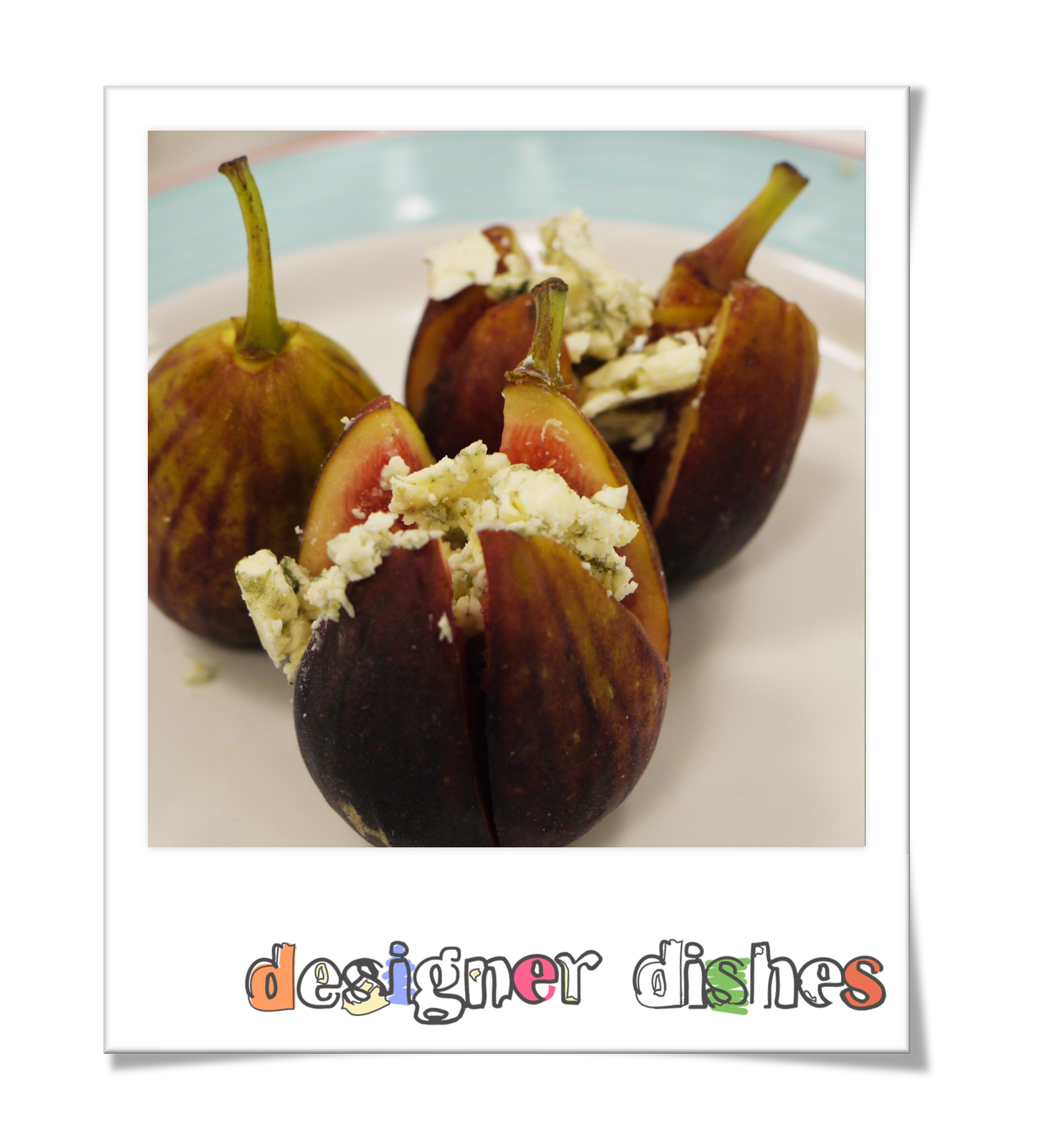
Snapshot: Blue cheese stuffed figs

The Boy and I spent ten glorious days in Lanzarote back in October and while we explored the sun-soaked scenery, we ate our way around the island. It wasn't just the cacti that caught my eye on our travels but the fig trees that were starting to bare fruit. It was like sweet torture to see the branches covered in immature figs that wouldn't be ready to eat during our holiday. We feasted on dates with bacon (which were amazing - I'll have to work on a recipe!) and dried figs but nothing saited my hunger for the fresh variety.

Now that I'm back home in far less exotic climes, I spotted a carton of figs which was reduced to clear. Fortuitiously, there was also a pack of Danish Blue cheese in the bargain bin that was going for a song. I simply couldn't resist - somethings are just meant to be.

For a lunchtime treat, remove the stalks and quarter ripe fresh figs by cutting nearly all the way to the bottom of the fruit but not quite. Gently pull each one open and crumble blue cheese into the cavity before gently squeezing back together. If you're feeling fancy, you would wrap the whole thing in whisps of parma ham. Serve with a fresh salad of winter leaves.

The intensely savory notes of the cheese are countered by the sweet juices of the fig. If you can't get your hands on fresh ones, try combining blue cheese with fig jam, quince cheese or even bog-standard strawberry jam. Combine the flavours in an up-market canape by topping a bite-sized cracker with a thin slice of fig and a sliver of cheese.

Wednesday, 7 December 2011

Honey glazed carrots

A chilly winter breeze has blown in and had me reaching for my thick coat, scarf and gloves. This is the time of year has me craving comfort food in the shape of rich risottos, beautiful bakes and sumptuous soups. In addition, my stomach seems to be gearing itself up for the big day and its legendary roast of epic proportions. Although I adore the meat element of a roast, I am a big fan of the accompaniments too. Crispy potatoes, Yorkshire puddings (not just with beef, I might add) and as many different kinds of vegetables as possible (as the season allows). 

Saying that, I like to keep things simple and, in my tiny kitchen, that means minimising the number of pans on the hob. Glazed roasted roots are a fantastic way to do this as it brings out their natural sweetness while reducing your hob-top saucepans. I’ve jotted down my recipe for carrots but it would work equally as well with parsnips or beetroot depending on your tastes. A little wholegrain mustard swirled through the glaze is a delight too!


Honey glazed carrots
Serves four as a side

250g chantenay carrots
1 tbsp sunflower oil
2 tbsp honey
1 tbsp butter
Salt and pepper to taste

-          - Preheat the oven to 180C.
-          - Scrape or peel the carrots (top and tail if necessary) and slice in half.  Place in a bowl, drizzle with oil and stir or toss with your fingers to coat them evenly. Season with a little salt and pepper.
-          - Spread out thinly on a baking tray and put in the oven for 30 minutes. Stir them once or twice to ensure that they cook evenly.
-          - Gently melt the butter and honey together over a low heat or in the microwave, stirring until combined.
-          - Remove the carrots from the oven and pour over the glaze.
-          - Return to the oven for another five or ten minutes until the carrots are browned on the outside but are soft enough to cut easily.

Saturday, 3 December 2011

Butternut Squash Risotto


The winter cold season is well and truly upon us and there are people coughing and sneezing wherever I look. I’ve started using my newspaper as a shield during my commute (has covering your mouth when you cough and sneeze gone out of fashion?) in a feeble attempt to avoid the inevitable. So far so good though I’ve probably jinxed myself by saying that! Whether you are currently suffering or if you, like me, are desperately trying to dodge the sniffles that are doing the rounds, you could help yourself by eating right. Butternut nut squash is a fantastic versatile ingredient and it’s packed full of vitamin C (great for boosting your immune system!) and calcium as well as other fantastic vitamins and minerals. Despite its luxuriously silky texture, it’s also low in saturated fat.

We’re coming to the end of the winter squash season but they keep for up to three months in a cool dark environment so there’s still time to squirrel some away under the stairs or in your larder cupboard. I like to buy them up when they’re in season and cheap in the supermarket then peel and roast them when I’ve got the oven on anyway to save on energy. This is a great excuse, if you’re in need of one, to make a cake or maybe some cookies! You can then box or bag it up and freeze it cooked ready for winter salads, warming soups and hearty risottos.


Butternut Squash Risotto with sage
Serves two amply 

½  medium-sized butternut squash, seeds removed
½ onion, finely diced
1 stick celery, finely diced
1 carrot, finely diced
1 clove garlic, sliced
150g risotto rice
80ml white wine or dry vermouth
500ml vegetable stock
1 small bunch of fresh sage, chopped or 2 tsp dried sage
50g butter
50g parmesan

-          Preheat the oven to 190C. Peel and chop the squash into 1.5cm chunks. Pop them on a non-stick baking tray and stick them in the oven for 30 minutes or so while you make the risotto. Check the squash every so often and turn it with a spoon to ensure that it cooks evenly. The squash is cooked when its soft and slightly golden. If you are using pre-cooked butternut squash, you can obviously skip this step and commend yourself for being well organised.
-          Heat a little oil in a heavy-based saucepan and sweat the onion, carrot and celery until soft and sweet.
-          Tip in the rice and stir until it has absorbed all of the juices of the vegetables in the pan. Pour in the wine and keep stirring while that absorbs to ensure that the rice doesn’t stick.
-          Add the garlic and then the stock a ladleful at a time, stirring until all of the liquid is absorbed before adding more.
-          Check the butternut squash, which should be cooked through. (If it isn’t, cover the risotto and turn off the heat below it.)  Mash half of it to a course purée and stir this into the risotto with the butter, sage and parmesan. Fold in or top with the rest of the roasted squash.

Tuesday, 20 September 2011

Autumnal Tomato & Marrow Soup


It definitely feels like autumn. The days are starting to draw in and I'm getting forgetful... If you're part of the Facebook revolution, you'll already know that we went away to enjoy some time on our friend's narrowboat this weekend. I'd prepared a warming casserole for our first meal on the boat and promised to share more details with you on my return. Now, I can be rather forgetful at times so I wrote a list for myself. Toothbrush? Check. A little light reading? Check. Camera? Check. All set. Or maybe not because, when I packed away my faithful camera, I didn't check that it had a memory card in it. School girl error! So I had a camera but no way of recording what turned out to be a lovely meal (though I do say so myself). I gave myself a stern talking to, I can tell you. That aside, we had a fantastic weekend with lots of picnic lunching on the roof.

For now, please warm your cockles with another marrow recipe. Come rain or shine - blustery chilling showers or crisp icy sunshine - this soup is rich, flavoursome and easily prepared in far less than thirty minutes. I made it first thing in the morning so that the only thing that stood in our way of a tasty hot dinner was a little heating up. I even took a serving to work for my lunch, which went down a treat.

This recipe was great for using up some of the marrow that I've recently been given by a colleague however there's still half left in the fridge so there's sure to be another marrow recipe popping up on here in the next few days!


Autumnal Tomato & Marrow Soup
Serves 4

½ onion, sliced
½ large marrow, cubed (my whole marrow was about 40cm by 15cm - a whopper!)
1 green pepper, sliced
1 tin of plum tomatoes, chopped
1 tsp of vegetable stock powder
1 sprig of thyme or 1 tsp dried thyme leaves
1 sprig of oregano or 1 tsp of dried oregano
1 clove garlic, sliced

- Sweat the onion in a large saucepan for a few minutes until soft and slightly translucent.
- Throw in the marrow and cook over a medium heat. It will soften, break down and become a little watery in the pan.
- Add the tomatoes, pepper, stock and herbs to the pan. If the juice from the tomatoes doesn’t cover the marrow, top up with boiling water. Bring to a simmer and add the garlic.
- Simmer for 10 minutes or until all of the vegetables are soft.
- Serve with grated cheddar or crumbled goats cheese and a hunk of crusty bread.

Friday, 16 September 2011

Hearty Healthy Pizza Stuffed Marrow

It's not often that I get déjá vu however this particular incidence is unique because it revolves around vegetables. Marrows, in fact. Around this time last year, we had been gifted tons of courgettes and marrows through The Boy's workmates. This year, it's my workmates that are donating their vegetables to us. I've turned to my trusty stuffing technique for the ginormous marrow that's been taking up the best part of an entire shelf in our fridge for the last few days.


Admittedly not my best photograph for this very reason and I very nearly didn't post it for that very reason but I couldn't let vanity get in the way of showing you just how big this beast was! I decided to go for a combination of tomatoes and herbs to bring out the sweet roasted marrow flavour. Topping the whole lot with a little cheese made it quite reminiscent of pizza! The trick with this recipe is to reduce the filling down until it's almost dry; that way, the marrow doesn't go soggy when you stuff it. Slice it up and serve it with wilted swiss chard and wild rice or crusty bread to mop up the juices.

Pizza Stuffed Marrow
Serves 4 - 6

1 marrow (30cm or so long)
1 onion, chopped
1 stick of celery, chopped
1 can of plum tomatoes
2 tsp dried thyme
1 tsp dried oregano
1 clove of garlic, crushed
1 tsp vegetable stock powder
50g mature cheddar cheese

 - Preheat the oven to 190c.
 - Rinse the marrow and cut it lengthways. Scoop out the insides, leaving a 1cm (or so) strip of flesh around the skin. Place the empty halves on a baking tray and put in the oven for 20 minutes.
 - Meanwhile, sweat the onion and celery in a little oil over a medium heat while you chop the marrow innards into chunks. Add them to the pan and let them cook down. They'll express a lot of watery liquid and when they do, turn up the heat to simmer it off. Sprinkle the herbs and garlic into the pan.
 - While the marrow simmers, drain the tomatoes (keep the juices for something else) and roughly chop. Add them into saucepan and stir. Continue to simmer, stirring occasionally to ensure that it doesn't stick to the bottom of the pan.
 - When the mixture has reduced down so that there's no remaining liquid, remove the marrow halves from the oven and spoon the mixture into it until it is level. Top with cheese and pop back into the oven for 15 minutes or until the cheese is golden brown.

Wednesday, 14 September 2011

Healthy Sin-Free Fruit Flapjacks


Looking for a way to use up your egg whites after making mayonnaise or custard? You could make meringues but for a sturdier snack, try these delicious flapjacks. The great news is that these can be whipped up using store cupboard ingredients combined with glorious in-season apples. The combination of egg whites and apple purée aren't detectable in the finished flapjacks but do away with the need for butter and oil like your usual recipes resulting in a guilt-free snack.

We have tons of apples at this time of year, for which we're indebted to to our generous families and neighbours, but I do know that Sainsburys are currently selling big bags of British Bramley apples for a mere £1. One bag will do you well for this recipe as well as crumbles and cakes galore. I've taken to stewing batches in the microwave for a few minutes and then freezing batches ready for later in the year when we're craving hot apple pies when the tree branches are bare. Throw in a few hedgerow blackberries too!

Another idea for freezing or using your gluts is apple sauce or purée. Peel, core and chop your apples, stew for a few minutes until softened and either keep chunky or mash/blitz in a food processor. Add sugar and/or salt to taste and serve with roasted pork or cold cuts. This freezes really well so that you can have a tasty, healthy condiment all year round. Alternatively, make a large batch, freeze half of it and use the rest in this tasty recipe! I tend to leave out the sugar when I'm using it for baking but it depends how much of a sweet tooth you have. They're pretty sturdy bars so they're ideal for throwing into school lunch boxes and into your rucksac for a mid-ride/walk energy boost.


Healthy Sin-Free Fruit Flapjacks
Makes 16 flapjacks

175g rolled oats
85g muesli
100g dried fruit (I used apricots and raisins)
50g mixed seeds or nuts (I used pumpkin, sesame and sunflower)
5 tbsp honey
2 egg whites
175g apple purée or sauce

- Preheat the oven to 180C and line a 20cm x 20cm baking tin with greaseproof paper.
- Gently warm the honey in a saucepan or in the microwave until runny.
- Combine the oats, muesli, dried fruit and seeds in a bowl and pour in honey, egg whites and apple purée. Stir until completely combined.
- Press the mixture into the tin and bake for 20 minutes or until firm.
- Leave to cool and slice into squares.

Fancy flapjacks in with your cuppa but don't fancy these ones? Keep it fruity with Apple & Blackcurrant Crumble Flapjacks but substitute with any seasonal fresh berries that you have such as blackberries. Or maybe you'd prefer sublimely soft Banana Flapjacks which you could top with melted chocolate if you're freely really sinful!

Friday, 24 June 2011

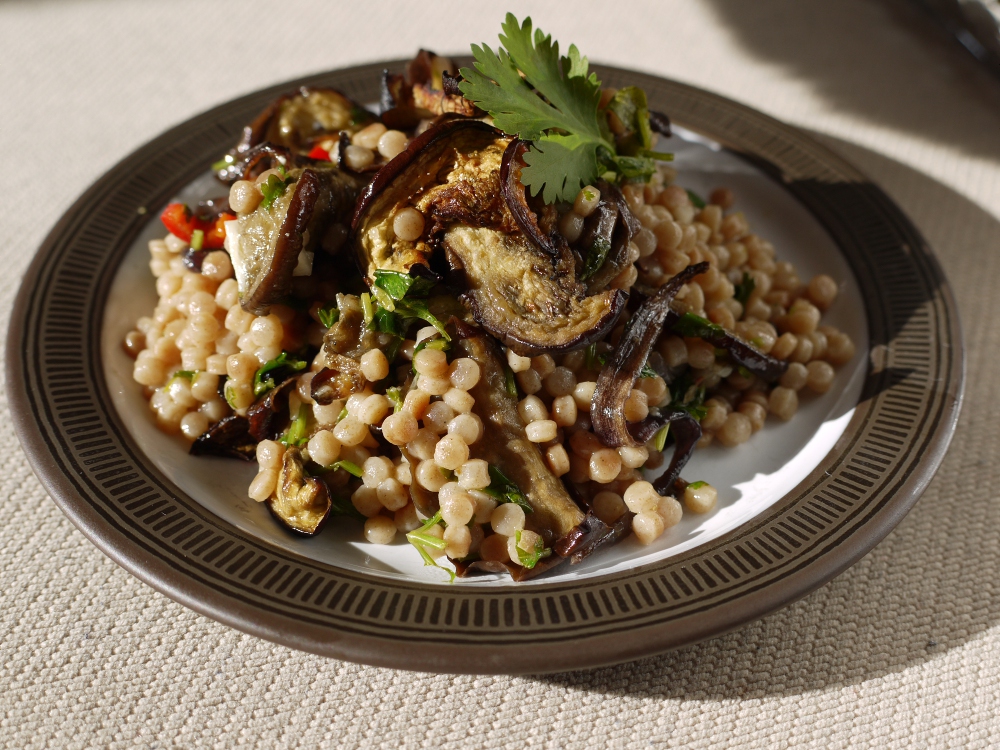
Israeli Couscous with Roasted Aubergine


As soon as IrvingWashington over at Hunger and Sauce posted her Israeli Cous Cous recipe, I knew I had to give it a try. It looked oh so delish with sweetly roasted figs, toasted hazelnuts and crumbly feta. Majorly droolsome.

I must admit that despite my Middle Eastern roots, I hadn't heard of the stuff before. I've used finer North African couscous since my uni days but had never seen this plumper variety. My first hurdle was to find the elusive carbohydrate; my local Sainsburys didn't stock it and the internet wasn't much help ("How much!?"). Luckily, my dearest Papa happened upon some in trusty Waitrose, marketed as 'Giant' Couscous. Dad's rock.


My meal plan fell to pieces when I managed to forget to buy figs. Oops. Still keen to try out my latest ingredient, I raided our fridge and came across an aubergine. I'd picked it up on a rare trip to Asda where they were selling them for 50p - half the price of Sainsburys where I usually shop. Some were little (half the size of the Sainsburys ones) but I rummaged one out which was a good size. I roasted it while I had one or two other bits in the oven so as to be as thrify as possible with my fuel. If you're turning the oven on for cakes or biscuits, why not pop a tray of aubergines or peppers in too? They'll keep well in a container in your fridge for at least a few days or you could freeze them for when you next need them?

Anyway, here's my Israeli cous cous recipe. I hope you like it! I'm still hoping that I remember to pick up those blasted figs when I'm next at the supermarket so that I can try out IrvingWashington's recipe!


Aubergine Israeli Couscous

Serves 2 as a side dish

1 aubergine
1 red onion, peeled
3 tbsp sunflower oil
100g Israeli or ‘Giant’ couscous
½ tsp vegetable stock powder (or around ¼ of a cube)
½ lemon, juiced and zested
2tbsp olive oil
1 tsp ground cumin
1 tsp white wine or cider vinegar
Handful of coriander, chopped
1 tsp chilli, finely chopped
1 clove garlic

- Whip the top off the aubergine, slice in half and cut into 5mm pieces. Do the same with the onion and place in a bowl. Pour 2 tbsp of sunflower oil over and toss until coated.
- Pop on to a baking tray and gently shake from side-to-side to level.
- Put into the oven and roast for 30 minutes at 190C. Remove the aubergine half way through cooking and stir so that it cooks evenly and goes golden on both sides.
- Meanwhile, heat the remaining 1 tbsp of sunflower oil in a pan over a medium heat and add the couscous. Gently brown the couscous for a few minutes so that it darkens slightly.
- While it cooks, measure out 200ml of cold water and add the stock powder and the whole garlic glove. Stir until the stock has dissolved.
- Add the water to the couscous and stir. Turn the heat below the pan to low, cover and bring to a simmer.
- After a minute, remove the garlic clove and then continue to simmer for about 15 minutes or until the water has been absorbed and the couscous is tender. Stir every so often so that it doesn’t clump together. You may need a little more water depending on your couscous.
- Mince the garlic and combine it with the olive oil, lemon juice, zest, chilli, cumin, vinegar and coriander in a large bowl. Add the aubergine and couscous and toss with your hands until everything has an even coating of dressing.
- Serve garnished with coriander leaves. Lovely with poached eggs or harissa chicken.

Thursday, 23 June 2011

Apple & Blackcurrent Crumble Flapjacks

Blackcurrants and redcurrants freshly picked from Thurloxton's fields

Summertime is on it's way and with it comes the the seasonal glut of glorious fruit and vegetables. One thing to make the most of (apart from the last trickle of British asparagus) is soft fruit. The supermarkets are packed with them - British strawberries and raspberries were both on offer when I last went - but the quality can be a little hit and miss as they are difficult to transport. That's the trouble with soft fruit. It's, well, soft.

Luckily for us, we have a great pick your own place nearby called Thurloxton Growers which grows all sorts from rhubarb and gooseberries to broadbeans and asparagus. They have several fields with lots of produce fresh on the vine, bush or plant to pick at your own pace. It's not cheap but the quality is amazing and they tend to have fruit that is otherwise hard to come by - red gooseberries and loganberries to name just two. Have a look for some fields near you here or type 'Pick your own' and then your location into a search engine. Many places, Thurloxton included, sell other local produce such as fresh cream to go with your freshly picked strawberries!

Otherwise, if you're stuck with the supermarket for your fruit, take a minute to take a close look at the fruit that goes into your basket. If the fruit has darker, soft patches or looks bruised, find another punnet. Alternatively, if you want your berries for jam or will be using them the same day, corner a member of staff and ask for a discount. It might sound embarrassing but if you don't ask, you don't get.


I spent a lovely afternoon picking red and black currants in the fields of Thurloxton. I'm very partial to eating the redcurrants raw if they're sweet enough but the blackcurrants proved a little too tart for snacking on. My Mother-in-Love had suggested jam but I wanted to do some baking with them.

What to make with my hoard? I adore flapjacks. They feel like the less sinful option when you fancy something cakey. They have butter and sugar in like a sponge but they contain oats instead of flour. That makes them healthy, right? Anyway, British Bramley apples are still in season and you know, dear reader, how much I like the them. It seemed apt to pair British Bramleys with British blackcurrants together.

I whipped up a batch using the apples as a base for the flapjack to give it extra flavour and also to make them moist and chewy. I left the skins in for added fibre (and because I couldn't be faffed to peel them!) which I can't say I've noticed in the finished flapjacks so for the convenience, I'd just keep them on. Once the flapjack base is done, just press the currants onto the surface, sprinkle with sugar and then top with more crumbly oats for a satisfying crunch before you pop it in the oven. It might sound like a lot of trouble for a flapjack but it's actually really simple and adds a lot to the finished article. I imagine that this would work well with any seasonal fruit that you've got lying about. You could also use frozen soft fruits from your freezer or from the supermarket outside of season.


Apple & Blackcurrant Crumble Flapjacks
Makes 12 pieces

For the flapjack base
3 large Bramley apples
200g oats
35ml honey
75g butter
60g sugar
100g fresh (or frozen) blackcurrants, washed

For the crumble topping
55g oats
15g butter, cubed
55g flaked almonds

 - Preheat the oven to 180C. Line a 20cm by 20cm baking tin with parchment paper.
 - Wash the apples, core them and chop into roughly 1cm cubes.
 - Put into a saucepan over a low heat with 40g of the sugar. Cover and simmer gently for around 10 - 15 minutes or until the apples start to fall apart.
 - Meanwhile, make the crumble topping by rubbing the butter and oats together with your fingers.
 - Stir the apples to form a smoothish paste. Add the butter and honey and bring to a gentle simmer.
 - Add the oats and stir until they're completely coated.
 - Press into the prepared tin, using a spatula or spoon to level.
 - Press the blackcurrants into the top of the flapjack and sprinkle with the remaining sugar.
 - Top with the crumble topping and scatter with flaked almonds.
 - Bake for 30 minutes until the blackcurrants burst and and the almonds and oats are golden.

Tuesday, 21 June 2011

Snapshot: Podding Peas

As I've previously mentioned, healthy snacks are rather difficult to come by. Eleven o'clock comes around on a weekday and my office erupts with the rustling of crisp packets and biscuit wrappers. Temptation is rife but today, I am fine. For today, dear reader, I have peas.

Just like my colleagues' convenience foods, they come in their own hygienic wrapping and can be picked on while I'm typing or draughting away. Unlike my workmates fodder, they are low in salt, sugar, preservatives and other nasties. They have a satisfying snap as I pop open the pod, which keeps me entertained (it's the simple things in life...). And as an added bonus, any waste can be composted - you can't say that about your average bag of crisps or biscuits!

British peas are in season right now and the supermarkets are stocking them. They're not cheap if you're compare them with the dinner staple frozen variety but we eat them in a very different way; on their own, raw and straight from the shell. They'd be lovely cooked and added to various meals but why over-complicate something that is so delicious on its own?

Monday, 20 June 2011

Grilled Courgette & Halloumi Salad


Father's Day. A another celebration (to add to the list along with Mothers Day and Valentines Day) dreamed up by the ingenious card companies to line their pockets after the card-buying frenzy of Christmas. I love my Dad and I hope that he knows how much I appreciate him but I quite like having an excuse to treat him. I suggesting inviting both The Boy's and my parents over for the day along with my siblings (The Boy’s sister lives too far away, sadly).

We may have stuck a finger up at card-giving commercialism but it did mean that we’d be cooking for eight. Blimey. I decided on a simple menu – a shared lunch of salads with homemade bread and a roast for dinner – but was still faced with tons of preparation in order to get to relax on the day. So, after an hour of aerial hoop and lunch with friends, I got down to some serious prepping. I quickly realised that - after my earlier exertions - once I stopped, I wouldn't be able to start again so I got through as many of many tasks with as much vigour as I could muster. I peeled vegetables for the roast, I soaked pulses for a bean salad, I roasted aubergines for a salad and I melted chocolate for a low(ish) fat cheesecake. Phew!

Sunday dawned and my muscles had locked up into a knot of achey lead. The Boy had helped me to prep a salad of seasonal courgettes and haloumi cheese which I thought would go down well with one and all. As he griddled, his brain was whirring - my recipe idea had sparked some foodie inspiration. He added peppers to my base of courgette, cheese, oregano and olives and topped the whole thing off with a sprinkling of sesame seeds. While the grill pan was still hot, I whacked on a lemon and stuck the grilled, caramalised halves on the plate to dress.

As our visitors arrived bearing various divine dishes - my Mum brought a fantastic homemade polenta based gluten free quiche while my Mum-in-Love brought a broad bean and bacon salad. Eight around our little table was, urm, rather friendly to say the least but it was made bearable by the mountains of food. My batch of green olive foccacia went down a storm but it was the courgette salad that was the real star of the show. The courgettes become sweet and soft when grilled which contrasts nicely with the salty bite of the green olives. The weather (predictably unpredictable) wasn't on our side and we didn't fancy barbecuing on our driveway so we used a grill pan but this could be popped on the barbie for a truly smokey flavour.


Grilled Courgette & Haloumi Salad
Serves 6 - 8 as a side dish

4 medium courgettes
2 peppers
250g halloumi cheese, drained and sliced
100g green olives, sliced
1 lemon
25g sesame seeds
handful of oregano leaves
sunflower oil

 - Put a griddle pan on a high heat to warm up until smoking. Alternatively, prepare your barbeque.
 - Wash the courgettes and cut them lengthways. Try to get them around 5mm thick but don't worry too much if you can't as they're not the easiest of things to cut! Deseed and slice the peppers and pop everything in a bowl with the halloumi cheese.
 - Drizzle the courgettes and pepper with a little oil and mix so that they are well covered. Carefully brush the griddle with a little oil on a heatproof brush or a kitchen towel.
 - Grill the courgette and pepper for a few minutes on each side until they are slightly softened and have charred lines. Remove to a serving dish.
 - Next, grill the halloumi for about 4 minutes, turning each slice so that it crisps up slightly and becomes charred. Add to the serving dish with the other vegetables.
 -  Turn off the heat under the pan and immediately put two lemon halves, cut side down, on to the grill. Leave for a few minutes until they are caramalised and browned.
 - Meanwhile, add the olives and oregano leaves to the dish and toss the salad. Top with sesame seeds and oregano sprigs. Serve with the grilled lemon halves to squeeze over.

Monday, 13 June 2011

Simple Home-baked Scones


 When a few friends came over to visit this weekend, the last thing that I was expecting was for one of my male friends to bring his craving for cream teas all the way over from Hampshire. This is a guy who likes mountain biking and sailing. And fast cars. And shoot-em-up pew-pew-pew computer games. He’s no less macho than your average man and yet he craves little cakes with cups of tea. Not that I’m suggesting anything, of course.

Anyway, a rainy post-mojito Sunday morning dawned and it was clear that no one wanted to leave the warm and dry of our flat in search of tea and cake. Instead, I got out my trusty scone recipe and threw together a batch. They’re so simple to make – preparation takes about 10 minutes or so and they don’t take much longer to bake. Within half an hour, you can be munching on warm scones.

Please don’t bother with the supermarket versions that are available; I’ve always found them to be a tremendous disappointment. Dry, crumbly and tasteless. Homemade scones are amazingly easy and so worthwhile for the flavour alone. Serve with clotted cream and strawberry jam for an authentic feel or go for whipped cream if the divine clotted kind isn't available. Just as lovely with butter, of course, though not quite as decadent. Top with a few British strawberries if you're feeling fancy (or if they were going cheap at the supermarket, like us!)


Sultana Scones
Makes 8 - 10

225g self raising flour
40g unsalted butter, at room temperature
1 ½ tbsp caster sugar
Pinch of salt
125ml semi-skimmed milk
50g sultanas

- Preheat oven to 220C
- Sift the flour over the butter in a large mixing bowl. Rub the two ingredients rapidly between your fingers to bring it together, taking care to break down any lumps. The mixture will have an almost sandy texture once you’re done.
- Add the raisins, sugar and salt and stir in with a table knife.
- Pour the milk into the bowl, a little at a time, mixing it in with the knife. The mixture will come together as you add the milk. You might not need to add all of the milk if the pastry is coming together nicely. If it looks a little dry, add a splash more milk.
- Flour a pastry board or (in my case) a clean worktop and roll out with a floured rolling pin. The pastry should be about ¾ inch thick. Cut your desired shapes – I used a floured glass but you can go as wild as you like with your pastry cutters.
- Pop the scones onto a parchment covered baking tray and bake for 12 – 15 minutes until golden brown.
- Allow to cool for a few minutes and serve warm with cream or butter and jam.
Related Posts Plugin for WordPress, Blogger...