Pages

Showing posts with label Recipe. Show all posts

Thursday, 6 September 2012

Banana oat muffins


Sometimes, the need for something sweet just cannot be avoided. I try to side step it; dodge the craving for doughnuts, persuade myself that a juicy apple will satisfy my craving, but that only works for so long.


You might just give in and snarf down a cookie or two but if you’d like something that’s delicious and a little bit healthier too, this is the recipe for you. These muffins are packed full of slow release oat energy, calcium and all the goodness of bananas. Although they’re chock full of bananas, it’s not an obvious flavour if you’re not they’re biggest fan. They’re just sweet enough, with a touch of honey in the mix, to sate your appetite for cake. If you're sensitive to gluten or coelic, choose gluten free oats which are available in most large supermarkets.

I’ve made them for breakfast and they’ve proved to be a very popular treat but they can be dressed up any way you like. I’ve kept them plain in my original recipe but you can add all sorts; dark chocolate chips or walnut pieces would be divine. Boost their fibre and mineral content with seeds in the batter or sprinkled on top. You can substitute the oats with wholegrain flour or ground almonds if the mood takes you.

On a practical note, beware as these are very sticky as they bake. Use a lightly oiled muffin pan without paper cases otherwise you’ll end up with lots of yummy muffins that you can’t get out of the cases. You can also use lightly oiled silicon cake cases, which work really well too.

Banana oat muffins Makes 6

125g (gluten free) porridge oats
140g low fat yoghurt/fromage frais
1 egg
2tbsp honey
1tsp baking powder
1 banana, mashed
1tsp cinnamon (optional)

 - Preheat the oven to 200C and use a dab of oil to grease a muffin tin or silicon cupcake moulds.
 - Beat the egg, honey and the banana together until combined then stir in the remaining ingredients. Alternatively, place all the ingredients in a blender and whizz until smooth.
 - Divide the batter between cups and bake for 20 - 25 minutes or until dark brown (the colour of over-ripe banana skin!) and springy to the touch.
 - Serve plain or split with a little butter.

Don't like oats? Substitute for wholegrain flour or ground almonds.
Too plain? Add dark chocolate chips and walnut pieces. Or dried fruit and your choice of seeds.

Thursday, 12 July 2012

Chocolate covered coconut macaroons


The world is going mad for macarons, the multi-coloured garish almond based meringue confections popular for afternoon tea around the world. Since I started working in London, I've seen swathes of tourists clutching pastel paper bags from the likes of Laduree. They're not the kind of thing that you find in Somerset! 


I'm partial to the odd macaron; they're cute, (dare I say) girlie and wonderfully bite-sized. However, they are a bit of a pig to bake. Achieving that light and fluffy texture is rather unpredictable, much like the somewhat troublesome meringue. If you're in need of a tasty sweet snack, maybe it would be better to by-pass the chichi and look a little closer to home. 


Macaroons (note the double 'o') are easy to throw together and provide the same deliciously sweet hit without the kitchen faff. According to the wonder that is Wikipedia, English macaroons and French macarons share the same Italian word maccarone or maccherone which derives from ammaccare meaning to crush or beat. Don't run away in horror; this refers to the crushed nuts that are the main ingredient of both recipes. Both are cousins of amaretti, the crunchy Italian almond biscuit. It's a very European affair.


I adore this recipe because it really is so simple. Bung the ingredients together, shape and pop in the oven. Decoration is optional but I like any excuse to mess around with chocolate. I've made these several times and they're an ideal mid-week bake because they're quick and easy to make out of ingredients that tend to lurk in the back of the larder. Oh and they're naturally gluten free too! 

Coconut macaroons
Makes 16 – 20

2 egg whites
300g unsweetened grated coconut (or the same of desiccated coconut)
3 tbsp runny honey (omit if using desiccated coconut)

To decorate
150g dark chocolate
10 glacé cherries (optional)

 - Preheat oven to 180C and line a baking tray with a silicon or greaseproof paper.
 - Whisk together the egg whites and honey (if using).
 - Add the coconut and stir until coated.
 - Scoop out tablespoon dollops of mixture, compact slightly and evenly space on baking tray.
 - Bake for 10 – 12 minutes or until golden brown.
 - Remove to a wire rack and allow to cool.
 - Melt the chocolate in a heatproof bowl over a pan of boiling water.
 - Meanwhile, halve the cherries so that they’re ready to garnish.
 - Dip the flat base of each macaroon into the chocolate and place on a tray covered in silicon or greaseproof paper. If you want a particularly luxurious macaroon, allow these to cool and dip again.
 - Drizzle the top of the macaroons with melted chocolate and garnish with a half cherry, dipped in a little chocolate to act as glue.

Wednesday, 13 June 2012

Summery chicken stew


The Boy and I have spent a glorious week touring the country to see friends and family. Naturally, our trips tend to revolve around food. We’ve barbecued near Bristol, sipped cider on the Cam (bringing a little bit of Somerset to Cambridge!) and noshed on marshmallows on a narrow boat.

Summer signals a flurry of activity for most people – time to make hay while the sun shines. If it’s raining – or if you’re busy dashing about doing a myriad of things simultaneously – you might like to come in after a long day to a bowl of stew.

This creamy chicken stew is light and fresh enough to suit a warm (if damp) summers day. As with all of my recipes, it’s easy and rather forgiving; you can leave it bubbling away on the stove (or in the oven – a similar amount of time at 180C should do the trick) while you go about your business. And, as long as you take care to ensure that it doesn’t boil dry, it won’t be ruined if you accidentally forget about it while you’re taking on the world.

This is a great recipe to have up your sleeve as a versatile and tasty dish. Although I’ve suggested kale, carrots and peas, you could throw in any vegetables that are in season and need using up. Asparagus works well if chucked in at the same time as the kale. In fact, you needed use kale – finely sliced cabbage, greens or spinach would work equally as well. An ideal one-pot supper to cut down on washing up without compromising on taste!

With all of the vegetables and light stock, this is a deliciously healthy meal. I would recommend using Quark instead of cream. It might sound like a Star Trek character but it’s actually a virtually fat free mild cheese that tastes lovely and creamy without being high in calories.

Summer Chicken Stew
Serves 4 – 6

6 chicken thighs, skin on
3 shallots or small onions, sliced
4 cloves garlic, sliced
4 carrots, sliced
½ chilli, deseeded and finely chopped
50g dried apricots, chopped
700ml chicken stock/water
300ml white wine/cider
50g curly kale, stalks removed and sliced
1 tbsp dried tarragon
100g quark or 100ml single cream
50g peas, ideally fresh from the pod but frozen is fine

- Add a drizzle of oil to a pan large enough to take all of the chicken pieces and vegetables with plenty of space over a high heat. Brown the chicken in batches, placing them skin side down for a few minutes and once golden brown, turn over. Remove from the pan.
- Brown the onion for ten minutes until golden brown and soft. Remove and set aside.
- Deglaze the pan with wine/cider; pour in the liquid and scrape the bottom of the pan with a wooden spoon or spatula to remove all of the cooked on flavour.
- Add the chicken and onions to the pan with the garlic, carrots, chilli, tarragon and apricots then cover with stock/water. Top up with boiling water if needed until everything is covered.
- Put a lid on the pan and turn the head down to a gentle simmer. Cook for 30 – 40 minutes until the carrots are tender and the chicken is cooked through.
- Remove from the heat and skin off a cup of the cooking liquor. Set aside to cool while you stir in the kale so that it is submerged in the liquid. The residual heat will cool it nicely.
- Meanwhile, whisk the quark or cream into the cooking liquor until smooth and lump-free. Add this back into the pan, along with the peas and stir through.
- Serve with jacket potatoes, boiled jersey royals or rice.

Friday, 1 June 2012

Low Fat Berry Banana Muffins


As the long weekend approaches, you might be on the lookout for delicious recipes. If we can’t rely on the weather, we might as well ensure that we have tasty things to eat. Whether you’re in need of something for a Jubilee street party or searching of a healthy breakfast treat, this easy muffin recipe is versatile and a great way to get a portion of fruit.

This recipe is low in fat and isn’t as sweet as the processed versions that you’ll find in coffee shops and supermarkets. It’s a great way to use up those forlorn overripe bananas too! The bananas help to keep the muffins nicely moist but don’t provide an overwhelming banana flavour which means that you can chop and change the flavour combinations.

I filled mine with cheap frozen mixed berries from the supermarket but you can add any that you fancy. Go for classic blueberry muffins or add half cherries and half almonds for a summery, seasonal twist.

I think I’ll be packing a few for a weekend bike ride for a little slow release energy!

Berry-nana muffins
Yields 12 muffins

150g whole grain flour
150g self-raising flour
1tsp bicarbonate of soda
100g light muscovado sugar
50g porridge oats, with a little more for garnishing
2 medium bananas, peeled and mashed
300ml low fat yoghurt
5 tbsp sunflower oil
2 egg whites
300g fresh or frozen berries

- Preheat the oven to 180c.
- Line a 12 hole muffin tin with paper muffin cases or squares of greaseproof paper (mine were approximately 10cm x 10cm).
- Mix the flours, bicarbonate of soda, sugar and oats together.
- In a separate bowl, combine the mashed banana, yoghurt, oil and egg.
- Make a well in the dry ingredients and pour in the liquid mixture. Stir quickly but gently to bring everything together. Don’t panic if the batter looks a little lumpy.
- Gently fold in the berries and divide between the muffin cases, sprinkling each one with a little oats.
- Bake for 18 – 20 minutes until golden brown.

Looking for a way to use up those unwanted egg yolks? Why not make mayonnaise for your weekend barbecues and sandwiches?

Friday, 18 May 2012

Barbecued butterflied salmon


The Boy has always said "Never trust a thin chef" and he seems to follow a similar logic for bushmen. Since I got to know him, I know that I've been wrestling with a rather hefty draw for his affections. He totally loves Ray Mears. His logic is that Ray, with his generous waist line, is not simply surviving in the wilderness but properly living.

His high regard for the portly master of the wilderness extends to his cooking skills. Our feeding-of-the-many-people gave him the ideal opportunity to try out some Mear-esque catering. Our lovely friends at Cronkshaw Fold provided us with a mammoth (whale-like) salmon which inspired The Boy to try out a butterfly technique that he’d seen Ray demonstrate.

After removing the fins and scoring around the head, he gently plied the bones away from the flesh and – voila! – a perfectly butterflied salmon. He then laid it out on the barbecue grill until the skin was satisfyingly crispy and the flesh was meltingly soft and juicy. It had taken on a deep smokey flavour which was incredibly moreish. We served it as it was with no accompaniment as a sort of starter before a vat of risotto was dished out.

It was pretty simple so I think this will become a regular dish at summer barbecues when the weather makes up its mind. I don’t know about you but I don’t think of fish when I think of goodies to slap on the grill. Sausages, for sure. Burgers, defo. Halloumi, my goodness yes. I might do a few prawn kebabs but nothing more adventurous than that. There must be good recipes out there! What are your fish recipes for the barbecue?


Butterflied barbecued salmon

You will need:
one whole salmon (ideally gutted and scaled by your fishmonger unless you're hardcore like Ray)
one sharp knfe

- If the fish is fresh from the water, scale it and remove the guts and innards.
- Remove the fins from the belly of the fish.
- Slice just behind the gills; this will help you when you remove the head later.
- Remove the dorsal fin by running the knife along the top of the fish.
- With the fish belly up, run your thumbs along the length of the spine between the skin and the ribs to ease the bones away from the flesh. Do this on both sides and pull out the head, spine and bones in one piece.
- Lay the fish skin side down on a hot barbecue and cook until the skin is charred. If the fish is particularly fleshy and thick, cover it with foil to help cook the otherside.
- Briefly turn the fish over to add some colour to the flesh before serving.

Saturday, 5 May 2012

Sticky Toffee Bread and Butter Pudding


Sometimes the simplest combinations are the best. Salty Cheddar cheese paired with sweet and sour Branston pickle, for example, or sweet ripe tomatoes combined with aromatic basil leaves. Both examples are far more than the sum of their parts. Bread and butter is another classic duo which are endlessly versatile; they work as an accompaniment with all sorts from scampi to jam.

I must admit that I was never drawn to the British classic, bread and butter pudding, when I was young. I always associated bread with savoury flavours and so, the idea of adding it to a sweet dish didn't compute. How wrong I was! It's such an easy dessert to make and is very forgiving if you feel the need to bend the recipe to your culinary whims. For my recent al-fresco-feeding-of-the-many-people moment at Cronkshaw Fold Farm, I added a luxurious sticky toffee element - as a nod to another British classic - but you could omit the deliciously sticky dates and caramel sauce for dried cranberries and white chocolate instead. Raisins and nuts would work well too. Or you could go for a virgin version and revel in simple stodgy comfort food. Either way, hot or cold, this ones a winner.

One of my lovely friends (I only have lovely friends, you understand) is gluten intolerant, just like my dear Mum, so my version was made - very successfully, I might add - with gluten-free bread. The custard binds everything together so that the bread, which without gluten is usually very dry and crumbly, was soft and moreish.

Sticky Toffee Bread and Butter Pudding
Serves four (multiply at will)

For the pudding
150g pitted dates
½ tsp bicarbonate of soda
50g butter
10 slices of bread (brown, white, granary – the choice is yours)
400ml milk
2 eggs
25g sugar (plus 1 tbsp to top the pudding)
1 tsp vanilla extract

For the sauce
100g sugar
100g butter
100ml cream

- Preheat the oven to 180C.
- Put the dates and bicarbonate of soda in a small saucepan and top up with water until just covered. Place over a low heat and simmer until the dates have broken down, stirring occasionally. Once the process is complete, they will look alarmingly like tar but fear not, as they taste amazing. Remove from the pan and set aside.
- Meanwhile, whisk the eggs and sugar together until creamy. Set aside.
- Once the dates have completely collapsed and you've emptied the pan, pour the milk into the saucepan and place over a low heat to warm through. This has the double benefit of infusing the milk with the toffee notes of the dates while making the pan easier to clean (as well as reducing washing up!).
- While the milk is warming, butter the bread then smear with a little date mixture and cut diagonally into triangles.
- When the milk has come to temperature, whisk slowly into the eggs and sugar.
- Place a few slices of the buttered bread into a baking tin, slightly overlapping them as you go. If you have any of the date mixture leftover, add a smear or two of that. Repeat the layers until you've used up all of the bread.
- Slowly pour the egg mixture over the bread and leave it to soak for 30 minutes or so. You might want to press the bread down into the mixture so that it soaks up all of the custard-y goodness.
- Scatter with the reserved sugar and bake for 40 - 45 minutes until golden brown and crisp on top.
- While the pudding is in the oven, melt the sugar in a saucepan over a low heat. Stay on the ball here or you’ll end up with a burnt mess. The edges will start to melt first – as soon as the first centimetre or so starts to turn golden brown remove from the heat and whisk the butter into the mixture.
- Next pour in the cream and return to a low heat, whisking constantly to remove any lumps. Add a pinch of fleur de sel or sea salt if you’re feeling fancy and want to go for a de rigueur salted caramel sauce.

Sunday, 29 April 2012

Butternut Squash Risotto with gorgonzola and wild garlic purée


Nothing rings in the lighter evenings like a camping expedition complete with smoke-swathed open fire. Despite the weather, we met up with some friends up North and we needed something to feed the masses al fresco at the lovely Cronkshaw Fold Farm. Given the horrendous wet weather and cool breezes, risotto seemed to fit the bill very well in terms of belly-filling and easy multiplication for a large party. The rain clouds parted for a brief interval so the pan was finished off over the barbecue while everyone drank Parchers (Pimms and Archers schnapps mixed with lemonade, obviously...).

Our night under canvas was somewhat scuppered by the heavens opening as we chomped our way through pudding. The hardened (and particularly warm-blooded) members of the gang earned kudos and man points by slumbering al tento though I must admit that The Boy and I retired to the protection of the farm house to find nocturnal shelter from the deluge.


Wild garlic is still in season and if you're fortunate enough to catch it before it flowers, it's a fantastic free ingredient. It's plentiful in hedgerows and the countryside in general so pick it while you can. You can find lots of friendly faces online who are willing to through in their tuppence-worth on how to identify and pick this pungent delight. The purée featured below makes a fantastic addition to your fridge jar collection as its incredibly versatile. Whisk it into salad dressings, stir through pasta or fold into pesto for a grassy, garlic hit.


Butternut Squash Risotto with gorgonzola and wild garlic purée
Serves four (but easily multiplied for a larger party, as I did)

For the risotto
1  medium-sized butternut squash, halved with seeds removed
1 onion, finely diced
2 carrots, finely diced or grated
2 clove garlic, peeled
300g risotto rice
160ml white wine or dry vermouth (or a splash of white wine vinegar)
1l vegetable stock
50g butter
50g parmesan, grated
125g gorgonzola

For the purée
120g (several large handfuls) fresh wild garlic leaves, washed
50ml olive oil

- Preheat the oven to 190C. Peel and chop the squash into 1.5cm chunks. Pop them on a non-stick baking tray with the garlic cloves and stick them in the oven for 30 minutes or so while you make the risotto. Check the squash every so often and turn it with a spoon to ensure that it cooks evenly. The squash is cooked when its soft when pressed, slightly golden and starting to caramelise around the edges.
- Heat a large pan of boiling water and drop the wild garlic leaves into it. Leave them to soak for a mere ten seconds then remove them and plunge into cold water for a minute or two and drain.
- Blitz the leaves with olive oil in a food processor until smooth.
- Heat a little oil in a heavy-based saucepan and sweat the onion and carrot until soft and sweet.
- While you wait, heat up your stock so that it is warmed through and keep it on a low heat.
- Tip in the rice and stir until it has absorbed all of the juices of the vegetables in the pan. Pour in the wine (or vinegar) and keep stirring while that absorbs to ensure that the rice doesn’t stick.
- Add the hot stock a ladleful at a time, stirring until all of the liquid is absorbed before adding more.
- Check the butternut squash, which should be cooked through. (If it isn’t, cover the risotto and turn off the heat below it.)  Mash half of it with the garlic cloves to a course purée and stir this into the risotto with the butter and parmesan. Fold in or top with the rest of the roasted squash, dot with wild garlic purée and sprinkle with chunks of gorgonzola.

Do you love risotto? It's fantastically versatile! Why not try a classic butternut squash risotto, sweet and fresh pea risotto or nutty seasonal asparagus risotto.

Thursday, 26 April 2012

Pomegranate & Feta Bulgur Wheat Cous Cous Salad


There seems to be one standard topic of conversation today: the weather. Our chatterings have stubbornly circled the subject like flies buzzing lazily around an enclosed room. Anyone venturing outside has returned sullen and soaked through - ah April, we'll be glad to see the back of you and your persistent showers.

I don't know about you but I was certainly in need of some sunshine to brighten up my lunch break. As the English weather wouldn't provide, I decided to get my fix in a culinary form: pomegranate. I adore its mouth-watering sweet flavour and sharp tangy after taste which makes it an ideal partner to salty, milky feta cheese.

A pairing like this needs a hearty foundation which is why this recipe calls for bulgur wheat. It's basically the butch big brother to cous cous - chunkier and meatier with more bite. It's easy to prepare and is ideal for salads; adding spices in the soaking liquor effectively self-dresses the salad so it just needs finishing off with simple lemon juice and mint. Ideal for prepping in advance and assembling at the last minute! Unfortunately, bulgur wheat isn't suitable for those that are sensitive to gluten but it can be substituted for quinoa or rice if necessary.

Pomegranate & Feta Bulgur Wheat Cous Cous Salad
Serves 2 – 4

1 ripe pomegranate
1 red onion, sliced
2 cloves garlic, sliced
2 green chillis, chopped
200g feta
1 tsp dried cumin
1 tsp dried coriander
½ tsp cinnamon
Pinch of ginger
Pinch of turmeric
100g dried bulgur wheat
½ veg stock cube
Juice of half a lemon
Small bunch of mint

- Boil a kettle of water with enough water for around three cups of tea.
- Meanwhile, place the stock cube, dried spices and bulgur wheat in a deep bowl. Once boiled, pour water over the dried ingredients until it is completely covered by ½ inch of water. Stir well and set to one side.
- Sweat the onion with a drop of oil over a low heat for 15 minutes, stirring occasionally so that it does not stick, until soft and translucent.
- Add the garlic and chilli and allow to soften and the flavours mellow for a minute or two. Set to one side off the heat.
- Remove the seeds from the pomegranate and crumble the feta. Remove the leaves from the mint and roughly chop or chiffonade if you’re fancy.
- Check the bulgur wheat; it should be plump and tender and have absorbed the liquid. If it’s not tender, leave it to soak a little longer. If it’s tender but still has excess liquid, drain through a sieve.
- Assemble the salad by tossing the tender bulgur wheat with the softened onions, pomegranate seeds and crumbled feta. Dress with mint and lemon juice.

Friday, 6 April 2012

Raspberry pancakes


Make breakfast worth waking up for, that’s my motto. This is mainly because I’m not a morning person so I require a meal with enough allure to pull me out from the warmth of my duvet and shake off my sleepy state. I generally go for a wholesome bowl of muesli or porridge but I decided to try something a little different for a change.

I’ve been eyeing up this hearty pancake recipe on IrvingtonWashington’s blog since Pancake Day. I wanted to get up a few hours early and eat with The Boy who tends to be up and out at the crack of dawn to put in a long day at the office. With a leftover tub of Greek yoghurt in the fridge and a bag of frozen raspberries winking at me from the freezer, it seemed like an opportune moment to try it out. I must admit that I cheated a bit; I made them the night before and then microwaved them in the morning. Even I struggle to be a culinary goddess first thing in the morning…

And oh my, these did not disappoint. Deliciously light yet nicely filling – perfect to kick start your day. They’re not very sweet so they definitely need to be served with syrup, honey or jam. Can't wait to try an apple and cinnamon variation. Ideal for the long Easter weekend!

Raspberry pancakes with caramel syrup
Serves two heartily, makes 10 

For the pancakes
250g low/no fat Greek yoghurt
3 tbsp milk
80g plain flour 
3 large eggs, separated
100g frozen raspberries, defrosted

For the syrup (optional)
6 tbsp caster sugar
50ml water

- If you’re making the syrup, start with this. Heat the sugar in a heavy based pan over a medium heat. It will gradually start to melt – don’t be tempted to stir it! 
- Wait until its completely melted and golden brown then add the water. It will bubble and hiss so stand back and let it do its thing then whisk until smooth.
- Next stir the egg yolks, milk and flour together until combined.
- Whisk the egg whites into soft peaks and gently fold it into the egg yolk mixture. Be careful to do this delicately so as not to knock the air out of the mixture. 
- Fold the raspberries into the mixture.
- Heat a non-stick frying pan over a low heat and wipe with a little sunflower oil or butter. Add spoonfuls of the mixture – I kept mine small and thick, like Scotch pancakes. Cook a few minutes until small bubbles will appear at the edges then ease from the bottom of the pan and turn over for a few minutes more.
- Serve warm with the syrup (if using) or with jam or honey.

Thursday, 8 March 2012

Lemon muffins with caramelised white chocolate frosting


Add a hint of Springtime freshness to your tea break with this yummy lemon muffin recipe. They’re a sure fire hit with colleagues, family or friends. The basic recipe is quick to make and bung in the oven while you’re making other things. The zingy lemon flavour means that they’re not too sweet and they’re incredibly moist for a butter-free recipe. Add a tablespoon or two of poppyseeds if you’d like to add some bite if you wish.

Keep them naked or swathe them in a creamy topping of caramelised white chocolate frosting. This takes time but is well worth it for the sweet, butterscotch flavour. I'm not usual a fan of cloyingly sweet white chocolate but when Rachel over at What Rachel Ate praised it, I had to give it a try. A lower fat alternative to traditional buttercream, this icing uses soft cheese or quark to give it a silky texture without the added calories.


Lemon muffins with caramelised white chocolate frosting
Makes 12

For the muffins:
200g self-raising flour
150g Demerara sugar
2 tsp baking powder
¼ tsp salt
180g low fat plain yoghurt
150ml water
75ml sunflower oil, plus a little extra for greasing
Zest and juice of one lemon
1 egg, beaten

For the frosting:
100g white chocolate
1 tsp sunflower oil
100g low fat soft cheese or Quark
40g icing sugar

- Preheat the oven to 120c.
- Break up the chocolate and coat with oil. Spread out on a silicon non-stick sheet on a baking tray.
- Place in the oven for ten minutes. When you remove it, the chocolate should have started to melt. Mix it thoroughly, working the chocolate on the outside to the inside of the sheet, and then spread out again and repeat. You’re aiming for a golden brown caramel colour and a crumbly texture. Keep a close eye on it as it’s easy to burn.
- Once golden brown, set aside to cool and turn the oven up to 190c. Oil or line a muffin tin.
- In a mixing bowl, combine the flour with sugar, baking powder and salt.
- Make a well in the centre of the dry ingredients and add water, oil, lemon and egg. Mix everything together to form a light moist batter.
- Divide the batter between 12 muffin cups.
- Bake for 12 – 16 minutes or until a skewer comes out clean. Set aside to cool on a wire rack.
- Blitz the caramelised white chocolate with the icing sugar in a food processor until combined.
- Beat the soft cheese to break it up then add the sugar and white chocolate and stir well.
- Once the muffins are completely cool, dip the top of each one into the frosting or add a dollop of the mixture onto each muffin and smooth with a pallet knife.

Wednesday, 7 March 2012

Ultimate easy tomato soup

Looking for a quick and easy tomato soup recipe to warm you up on a cold day? Check this out!

Our warm spring days were short lived and it’s been rather blustery and cool here in London in recent days. The weather has regressed my appetite back to the start of Winter when I was craving hot, soothing food to warm my cockles after a chilly day of walking, cycling or simply slogging it out in the office. In my mind, the simplest and tastiest way to do this is with soup.

Soup is fantastic. It’s portable – pop it in a heated thermos to provide a warming lunch on a long walk – and a great way to smuggle tons of vegetables into your diet. The straw poll soup of choice is tomato and I’ve got a nifty trick to increase the goodness as well as the flavour in this common classic. You might think that my twist would involve slow roasted vine tomatoes or the best quality olive oil (which would be lovely but also time consuming or expensive) but it’s a little more unusual than that and it’s in season right now. Beetroot. Yes, you read correctly! This fantastic root is lends its depth of flavour and colour to make a deliciously rich tomato soup. You don’t even need to be the biggest beetroot fan as the taste and tone isn’t out and out beetroot; the addition simply gives it a certain je ne c’est quoi to the finished soup.

Beetroot is bursting with lots of vitamins (including vitamins A, B6 and C) and minerals like potassium, magnesium and iron. Beets are a great source carbohydrates, protein, powerful antioxidants, folic acid and soluble fibre. It’s available in bunches in the supermarket or your local farmers market but it can also be found all year round pre-cooked in shrink-wrapped packets. Either works well though the raw form will increase the cooking time as you’ll need to scrub it, remove the leaves and stork and then microwave with a splash of water until it is soft. Cooking times vary depending on the size of the root but I find it tends to take about 20 minutes on full power. Find out more about the health benefits of beetroot and a myriad recipes too.

This soup recipe is quick, healthy and cheap. It takes less than 20 minutes to prepare and cook. Even better, a portion comes in at about 25p so it’s an absolute bargain! Cheaper and tastier than Heinz cream of tomato any day. You can freeze it in batches and it will also keep well in the fridge for a few days if you whip up a big batch.


Ultimate easy tomato soup
Makes 4 – 6 servings (depending on how greedy you are!)

Ingredients:
1 onion
1 carrot
1 stick of celery
1 400g can of chopped tomatoes
1 300g pack of cooked beetroot or 250g of fresh beetroot topped and tailed and microwaved until soft
100ml water (or stock, if you prefer)

- Chop the onion, carrot and celery and sweat with a little oil (or a splash of water) for five minutes or until softened.
- Meanwhile, chop the beetroot then add to the pan with the tomatoes and water.
- Simmer for five minutes or until piping hot all the way through.
- Blend until smooth then season and serve topped with cheese or low fat yoghurt.

Sunday, 29 January 2012

Cashew Cookie Bars


Despite my love of food, I’m not actually that good at feeding myself. Feeding others is no problem – easy peasy – but taking care of number one isn’t high on my list of priorities. I’m a rather busy lady but it’s taken me a while to grasp that I need to replace the calories that I’m working out of my system. It’s starting to dawn on me (after several oh-my-gosh-i-feel-faint moments – whoops!) that I maybe need to start eating a little more between my bike rides, dance classes, acrobatic episodes and general dogs bodying.

Now, if this wasn’t enough to undertake, I want to eat right too. Empty calories aren’t my thing – they need to be functional, nutritious and oh so delicious. I discovered Nakd Cashew Cookie bars a little while ago and loved them so much that I was determined to try and make my own. Considering that the lovely people at Nakd cram a magical mix of dates and nuts into their soft chewy bars, I figured that it wouldn’t be too difficult to create my own version in the kitchen.

I did a little research and found that America has their own equivalent – Lara bars – which are pretty similar. The more I read, the more I thought “it doesn’t need to be this difficult! It’s just nuts and fruit…” so I threw caution to the wind. I ground up a load of cashews, snipped up several handfuls of sticky dates and got my hands rather dirty smooshing it all together. One of the great winners about these bars is that they are 100% bake free. No cooking required!

They can be a little time consuming to make but they are well worth it. The finished bars are just as yielding and sweet as the originals. I wrapped mine individually in cling-film and now keep one in my rucksac for a post-workout shot of protein. Keep them in the fridge and pop one in your bag or lunchbox for a healthy snack. One of your five a day!


Cashew Cookie bars
Makes 12 bars

Ingredients:
200g pitted unsweetened dates
200g unsalted cashews

- Line a loaf tin with Teflon non-stick baking sheet, greaseproof paper or cling film before you start (and you get super sticky fingers).
- Grind the cashews in a food processor or blender until fine. You want them to be the consistency of ground almonds or course sand though a few chunks or whole nuts in the mix are fine by me. If you don’t have a food processor, you could seal the nuts in a plastic bag, wrap in a few tea towels and then bash with a rolling pin. Free stress relief!
- Snip up the dates with scissors so that they are in very small pieces (as fine as you have the patience for – it will pay off later!). You could also chop them in the food processor if you have one that is man enough for the job.
- Combine both in a bowl and get your hands in to work the mixture. Scrunch it up in your hands, balling it together and then breaking it apart again to form a firm but slightly sticky mixture. This took me about five minutes but it depends how strong you’re feeling.
- Tip the mixture into your prepared tin and level with a spoon.
- Compress the mixture using the back of a spoon and then the bottom of a tumbler or end of a rolling pin. Keep pressing it down until it’s very solid and holds together.
- Remove the block from the tin (pull gently on the lining to help ease it out) then cut into bar-sized portions.

Tuesday, 24 January 2012

Caramelised balsamic onions


I don’t know about you but I love a versatile ingredient; an item that can spark (at least) a dozen recipe or meal ideas and a flush of food-related excitement. There are many, many things that have that effect on me but there’s one in particular that I would like to share with you today.

Caramelised onions.

Those two words set off a firework of cooking concepts in my mind; recipes sizzle in my sub-conscious while images flicker in front of my eyes. Caramelised white onions in bolognaise sauce, sweet fried onions piled onto cheese atop a crisp cracker, crumbly goats cheese tart mingled with caramelised red onions, a rich onion-y hit in soups and stews… the list goes on and on. My mouth is watering while I type!

You can buy jars of onions chutney in the supermarkets which is all well and good but you can easily make your own easily and cheaply at home. Onions are a staple which I always have in my store cupboard because they are the foundation of many (most!) of my savoury dishes. Caramelising simply involves cooking them over a low heat for an extended period of time to bring out their natural sweetness. Once cooked, they can be kept for up to a week in the fridge but I doubt very much that they will last that long! If you have enough self-control, a jar of deliciously soft and sweet onions can make a fantastic gift idea for foodies.So if you’ve ever wondered how to make caramelised onions, read on.

I’d love to spend tons of time slaving over the stove but I genuinely don’t have the time. My recipe below gives you a cheat’s option which side steps the traditional yet time-consuming caramelising process. Of course, if you have the time to spare, by all means sweat them down over an hour or so to get the most out of them. If, like me, you’re short on time but need your onion fix, give this easy healthy recipe a go!


Balsamic caramelised onions
Makes 1 jar

Ingredients:
2 onions (red or white)
1 tsp sunflower oil or butter
½ tsp sugar or honey
1 tsp salt
3 tbsp balsamic vinegar

- Halve the onions, peel and slice. Sniffle.
- Pour in the oil (or butter, allowing it to melt if using) to a heavy based frying pan over a medium heat.
- Add the onions and sweat (covering with a lid) for five minutes or until softened.
- Remove the lid and reduce the heat. Cook for a further 10 to 20 minutes, stirring occasionally, until golden brown. The onions may catch on the bottom of the pan which is okay but don’t let them burn. If the mixture starts to look too dry, add a little water.*
- Add the sugar/honey and salt and stir well.
- Drizzle the onions with balsamic vinegar and use a metal or wooden spatula to scrape any browned bits from the bottom of the pan. Simmer until the balsamic has evaporated.
- Store in a jar in the fridge for up to a week. Smother on crackers, add to cheese toasties... the possibilities are endless!

*At this point, you could cook for up to an hour if you have time for a more traditional caramelised flavour.

Thursday, 19 January 2012

Pineapple and mango upside-down cake - sunshine on a plate!


Do not adjust your display settings. I thought I'd bring you a little edible sunshine in Spring! It this doesn't cheer you up after the freezing, wet days that we've had, I don't know what will! When you think of seasonal food at this time of year, your thoughts might fall to comforting root vegetables but tropical fruits are in their prime right now. Admitedly, they're not grown in the UK so there are a lot of food miles involved but if you're going to buy them, you might as well have them when they are at their best!

Pineapples, mangoes and passionfruits are all in season so I decided to combine them in one tasty cake for a fund-raising event at work. I adore pineapple upside-down cake so I thought that I would go one better and marry all of these exotic beauties together with a hint of lime in this famous retro dish. Its incredibly easy but the results are fantastic plus my colleagues mentioned that it tasted virtuous because each bite was filled with fruit. I'll cast no illusions - this isn't a healthy cake but I'm glad that it felt good to eat.

I'd also like to highlight the fantastic (even if I do say so myself) glaze that gives the cake it's glossy day-glow yellow tone. This stuff is so so morish; it's unreal! It's well worth the faff of sieving the passionfruits - my top tip is to microwave the fruit for less than a minute before halving them as it helps to encourage the pulp to slide out. If I'd have been making this cake for me, I would have been tempted to keep the pips in but as it happened, I stirred them into yoghurt for pudding as they have a lot of flavour. I'm tempted to make the glaze to top cheesecakes or to drizzle on pannacota in future.


Pineapple and mango upside-down cake with lime and passionfruit glaze
Makes 10 servings

For the topping (or should that be... bottoming...?)
1 mango
1 227g can of pineapple (packed in juice) or ¼ fresh pineapple
60g butter, softened
60g golden caster sugar

For the cake
150g butter, softened
150g caster sugar
150g flour
3 eggs
1tsp baking powder
1 tsp vanilla extract
1 lime
3 passionfruits

 - Preheat oven to 180C. Line a 20cm by 20cm square deep baking tin (or a 25cm round baking tin) with greaseproof
 - Start with (what will eventually be) the topping by creaming the butter and sugar together then smearing into the bottom of the pan. Skin the mango and drain the pineapple (retaining the juice for later) then arrange by pressing the pieces into the butter-sugar mix. Make a pretty pattern or go geometric... the choice is yours!
 - Next make the sponge base by creaming the butter and sugar together until light and fluffy. Add the zest of the lime and the vanilla extract.
 - Add the eggs one by one, beating well between each addition then fold in the flour and baking powder.
 - Spoon the cake batter over the fruit and gently shake the tin from side to side to encourage the mixture to get between the fruit pieces.
 - Bake for 35 minutes or until the sponge is firm and a knife/skewer comes out clean.
 - Meanwhile, pierce the passionfruits and microwave them for 30 seconds or until they are warmed through. Halve and scrape out the pulp then sieve out the seeds (you don't have to do this if you don't want to but it depends if you want the seeds to pepper your cakes caramel topping or not). Press the pulp through a non-metalic sieve with a spoon or similar for the best results.
 - Simmer the passionfruit pulp with the reserved pineapple juice and the juice from the lime until it has halved and become thick and sticky.
 - When the cake is ready, remove from the oven and set aside for five minutes before turning out onto a plate. Drizzle or brush with the glaze and ideally serve warm with coconut icecream.

Monday, 16 January 2012

Leek and Potato soup

I think I’ve started something. I like to make a batch of soup at the start of the week (or ideally, the end of the weekend) to feed me throughout the working week slog. With the delayed cold snap creeping in, my office kitchen has a rush hour between 1pm and 2pm where we all crowd around the microwave to heat up our lunchtime fare. Most people have been bringing in soup since Christmas but it’s mainly in the form of cartons or tubs of the readymade supermarket stuff. It seemed like a big thing when my colleagues would ask “Is that homemade!?” Naturally I instilled the virtues of making your own and I think I inspired someone. One of my colleagues came in on Monday looking fresh faced and glowing with a tub of her very own homemade soup. She was really pleased with the results and has followed the trend by making more this weekend. Fab!

I love homemade soup because it’s a great way to use up leftovers and can be adapted to whatever is in season. British leeks are in season at the moment and, combined with potatoes, they make a warming meal that will keep you full for ages. I think that soup has something of a bad name because many people think that it needs hours of boiling on a stove in order for it to ‘proper’ soup. This just isn’t the case! You can make soup incredibly quickly and for much less than the supermarkets. You can pack it with cheap ingredients that are seasonal and good for you plus you know exactly what went into it.

I have leek and potato in my lunchbox this week. Despite its luxuriously creamy taste and texture, there’s no added fat in the recipe so it’s healthy too! I like to add a swirl of wholegrain mustard to add a little je ne c’est quoi.

Leek & Potato soup
Makes 6 – 8 servings

1 onion, sliced
2 sticks of celery, sliced
½ parsnip, cubed
2 leeks, washed and sliced
3 medium potatoes, peeled and sliced
1l or so water or stock
3 tbsp fat free yoghurt
2 tbsp wholegrain mustard

- Sweat the onion, celery, parsnip and leeks over a low heat for three minutes or until soft and sweet. Add a splash of water (instead of butter or oil) to stop it catching and burning.
- Add the potatoes into the pan then top up with water or stock to cover the vegetables. Cover and simmer for 10 minutes or until the potatoes are soft.
- Remove half of the mixture and blitz in a blender – or use a hand blender in the pan so that the soup is mostly smooth but with a few chunks of potato and leek to chomp on.
- Adjust the consistency by adding more water or stock if you like a thinner soup then add the yoghurt and mustard before serving. Sprinkle with your choice of cheese or slurp with a side of cheese on toast.

Wednesday, 11 January 2012

Tender kale salad with roasted peppers and feta

Winter isn’t a season synonymous with salads but, with delicious leaves like curly kale in season, you can kick start your New Year with a nutritious and healthy salad. It’s a fantastically versatile dish which can be served hot or cold, with a main dish or on its own – the choice is yours! It’s quick and easy to zap in the microwave or bung on the hob. You can throw it together in about 10 minutes and it keeps really well – I’ve been making it in the evening while I make dinner and then scoffing it at my desk for an easy lunch.

It's a great accompaniment to fish, roasted vegetables or Parma ham (as you can see) but is strong enough to stand alone as a main meal. Choose the low fat feta if you're trying to be virtuous or omit it entirely if you'd rather. I tend to pop a tray of peppers in to roast whenever I have the oven on and then freeze them (any I don't nibble off the tray, at least) for a later date.


Kale salad with roasted peppers and feta
Serves one as a main or two as a side

For the salad:
150g curly kale
1 roasted pepper
100g feta cheese (or similar)
50g mushrooms, sliced

For the vinaigrette:
½ tsp Dijon mustard
2 tbsp olive oil
2 tbsp cider vinegar

- Microwave (or sweat in a pan over a low heat) the mushrooms for 4 minutes or until softened and awash with flavourful juices. Drain, keeping the juices for later, and transfer to a salad bowl.
- Remove any thick stalks that linger among your kale leaves. Wash the kale well in a bowl of water, drain (leaving a little moisture on the leaves) and transfer to a microwaveable dish (or pan). Cover with a plate and cook for 3 minutes or until wilted down and tender. Add to the mushrooms.
- Slice the peppers into long strips and crumble or cube the feta before adding both to the bowl with the other ingredients.
- Whisk the vinaigrette ingredients with the mushroom juices and pour over. Serve hot or cold with Parma ham or on its own.

Friday, 6 January 2012

Roast Partridge with chorizo, butter beans and kale

The festive season may be over but one of game birds from the ‘Twelve Days of Christmas’ carol is at its best right now. Retire the turkey and start climbing those pear trees! Partridge is a tasty native bird which bridges the gap between the pheasant and the quail. A partridge will feed one handsomely though if you’re a little eater like me, one can do for two meals. Game is growing in popularity so much so that the supermarkets have started to sell various unusual meats. They have the benefit of being local, free-range and very lean. You can find partridges in Sainsbury’s for £3 each though they’re the kind of thing that can be picked up cheap from the bargain bin at closing time. A good butcher should be able to source and prepare a partridge for you.

Now that you’ve got your bird, what do you do with it? It may look like a chicken but don’t treat it like one – they’re small and delicate so they’re easy to overcook. If you’re curious about how to cook partridge to perfection, try this simple and tasty recipe which pairs it with creamy butter beans, spicy chorizo and delicious kale which is also bang in season.


Roasted Partridge with chorizo, butter beans and kale
Serves 2, generously

2 whole partridges
½ onion, sliced
100g chorizo, roughly cut into chunks
1 can of butter beans, drained
2 large handfuls of sliced kale
1 clove of garlic, sliced

- Preheat the oven to 230C.
- Add a drizzle of oil to a roasting tin, large enough to take both birds, and place it directly on a medium heat. Add the chorizo and fry until golden. They’ll release lots of delicious flavoured oil to the pan as they cook. Remove with a slotted spoon and set aside.
- Add the partridges to the tin and brown all over for a few minutes in the pan. Scatter the pan with the sliced onion and loosely cover the birds with the foil from a pat of butter (or a piece of foil).
- Place in the oven and roast for 10 minutes. Baste the birds well with any juices in the pan. Recover with foil, lower the temperature to 180C and roast for a further 15 minutes. Check that the juices run clear and that the meat is piping hot all the way through.
- Remove the birds from the pan and set aside to rest. Put the pan on a low heat and add the chorizo, butter beans, kale and garlic. Cook for 5 minutes or until the beans are warmed through and the kale has wilted. Keep stirring to ensure that the beans don’t stick and add a little water if it becomes too dry.

Tuesday, 3 January 2012

Peach, Pear and Almond Pavlova


Happy New Year, my foodie friends! I’m afraid that I suffered with a “festive cold” over Christmas which meant that, instead of getting online and telling you how awful I was feeling, I decided to stay in bed (apart from a few misguided days when I went to work) and concentrate on getting better. Hope you don’t mind!

Despite my illness, I enjoyed my break and loved spending a whole ten days at home (proper Somerset home! Yay!) with The Boy and our families. We were given a gorgeous pasta maker by my grandmother so we’ve been mastering fresh pasta during the holidays. I’ve been pleasantly surprised by how easy it is to make and am now on the lookout for pasta dishes to match our tender sheets.

We spent New Year ’s Eve with good friends that The Boy and I went to school with. Our evening characterised the simple yet successful entertaining equation of great company plus delicious food (divided by optional banter, multiplied by reminiscing) equals wonderful evening. I was tasked with providing a pudding and with a glut of egg whites leftover from festive baking, the choice was clear. It was pavlova time. I made mine slightly more virtuous by substituting the traditional whipped cream with half fat crème fraiche.

I find that whipped egg whites can be something of a wild card ingredient. My top tips for limiting egg white disasters? I would recommend using a painstakingly clean glass or metal bowl (rubbed with a lemon if you’re really superstitious) for whisking in and be sure that your whisk is really clean too. Separating eggs can require a steady hand too so I break the egg over a mug or bowl to catch the egg whites before transferring them individually to the mixing bowl. That way, if a yolk happens to break, it only affects one egg (keep it for scrambled eggs or a cake) rather than your whole bowl – sods law says that its always the last egg when all of the others have separated perfectly!


Peach, Pear and Almond Pavlova
Serves 6 – 8

4 egg whites
225g caster sugar
1 tsp cornflour
1 tsp white wine vinegar (optional)
4 pears
1 star anise
1 cinnamon stick
1 vanilla pod
1 tin of peaches in juice
200ml apple and mango (or fruit of your choosing) juice
50g almonds
300ml half fat crème fraiche
25g icing sugar (or to taste)
Dark chocolate to decorate (optional)

- Preheat the oven to 180C. Cover a baking sheet with grease proof paper or baking parchment.
- Whisk the egg whites until they are just stiff and form shiny peaks. Ideally you want to do this with an electric mixer but if you don’t have one, you can do it by hand.
- Gradually add the caster sugar a couple of tablespoons at a time, whisking gently but thoroughly between spoonfuls.
- Once all of the sugar has been added, continue to whisk for a few minutes until the mixture is stiff and glossy. Fold in the corn flour and vinegar (if using) at this stage.
- Smooth onto the prepared baking tray (using a few blobs of meringue mixture under the parchment to keep it in place if necessary). The mixture needs to be about 4cm thick and it’s best if the outsides of your chosen shape are higher than the middle – I find the easiest way to do this is to gently smooth out the middle rather than piling up the sides. Of course, you could be fancy and pipe the meringue to make it look really pretty.
- Pop in the oven and immediately turn down to 120C. Bake for one and a half hours then leave in the oven until completely cool.
- Meanwhile, peel, core and quarter the pears. Drain the peaches, reserving the canning juice and set aside.
- Put into a saucepan and pour in enough juice (from the peaches as well as your chosen juice) to cover. Add the star anise and cinnamon. Slice open the vanilla pod lengthways (scrape out the seeds with a teaspoon and set aside) and add the empty pod to the pan.
- Poach the pears over a medium heat, keeping the pan to a gentle simmer, for around 15 minutes or until the pears are pleasantly soft. Remove from the poaching liquor and turn up the heat to reduce it to a syrup – this will take another 10 – 15 minutes or until thickened.
- Mix the crème fraiche, vanilla seeds and icing sugar. Taste and add more sugar if necessary then spoon on to the meringue base.
- Pop the almonds into a frying pan over a low heat and toast for a few minutes until slightly darker. Keep a close eye on them and don’t let them burn as they’ll become bitter.
- Arrange the fruit on top of the crème topping and intersperse with the toasted almonds. Scatter with grated chocolate to decorate. Serve drizzled with the poaching liquor syrup.

Wednesday, 14 December 2011

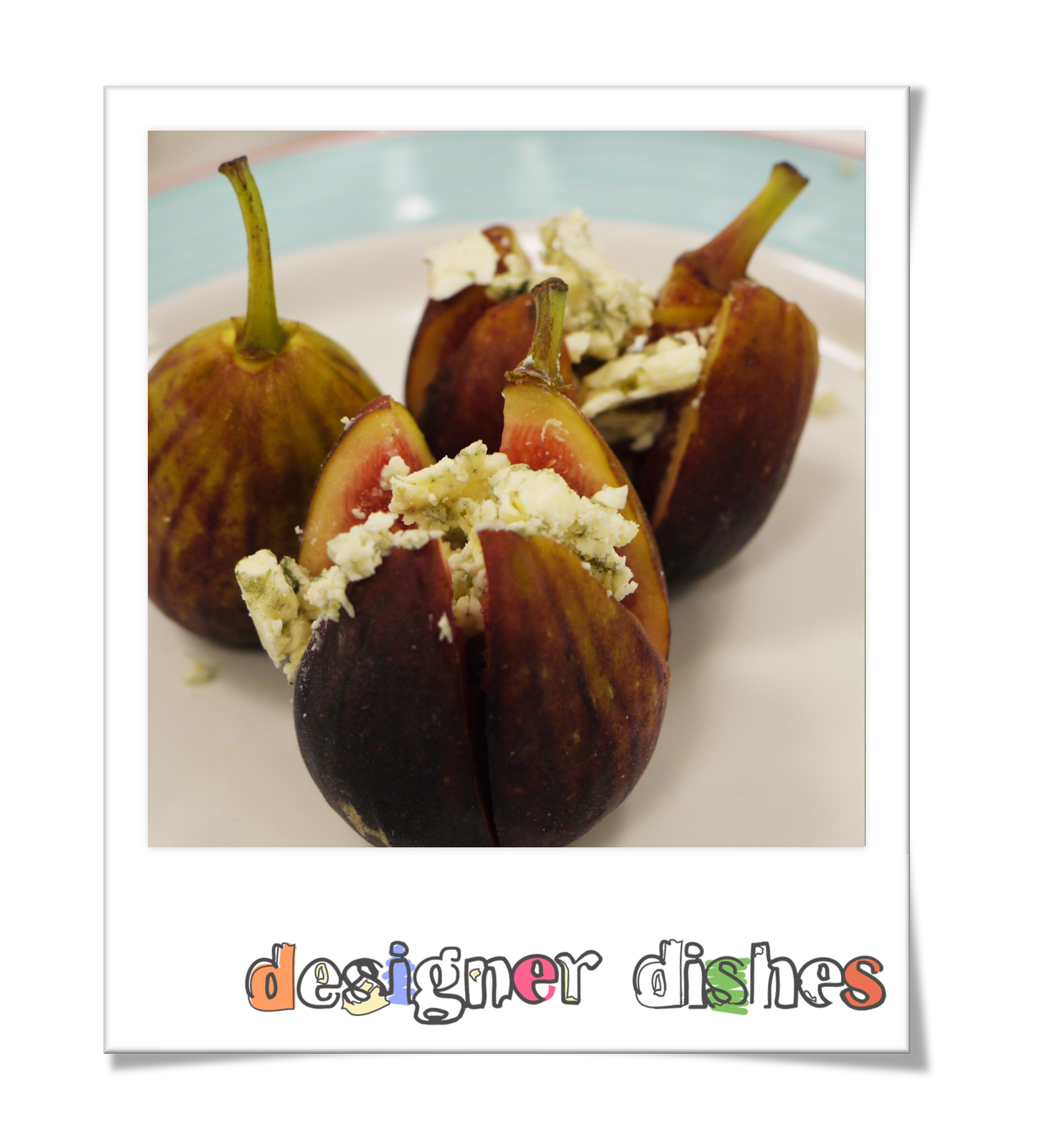
Snapshot: Blue cheese stuffed figs

The Boy and I spent ten glorious days in Lanzarote back in October and while we explored the sun-soaked scenery, we ate our way around the island. It wasn't just the cacti that caught my eye on our travels but the fig trees that were starting to bare fruit. It was like sweet torture to see the branches covered in immature figs that wouldn't be ready to eat during our holiday. We feasted on dates with bacon (which were amazing - I'll have to work on a recipe!) and dried figs but nothing saited my hunger for the fresh variety.

Now that I'm back home in far less exotic climes, I spotted a carton of figs which was reduced to clear. Fortuitiously, there was also a pack of Danish Blue cheese in the bargain bin that was going for a song. I simply couldn't resist - somethings are just meant to be.

For a lunchtime treat, remove the stalks and quarter ripe fresh figs by cutting nearly all the way to the bottom of the fruit but not quite. Gently pull each one open and crumble blue cheese into the cavity before gently squeezing back together. If you're feeling fancy, you would wrap the whole thing in whisps of parma ham. Serve with a fresh salad of winter leaves.

The intensely savory notes of the cheese are countered by the sweet juices of the fig. If you can't get your hands on fresh ones, try combining blue cheese with fig jam, quince cheese or even bog-standard strawberry jam. Combine the flavours in an up-market canape by topping a bite-sized cracker with a thin slice of fig and a sliver of cheese.

Wednesday, 7 December 2011

Honey glazed carrots

A chilly winter breeze has blown in and had me reaching for my thick coat, scarf and gloves. This is the time of year has me craving comfort food in the shape of rich risottos, beautiful bakes and sumptuous soups. In addition, my stomach seems to be gearing itself up for the big day and its legendary roast of epic proportions. Although I adore the meat element of a roast, I am a big fan of the accompaniments too. Crispy potatoes, Yorkshire puddings (not just with beef, I might add) and as many different kinds of vegetables as possible (as the season allows). 

Saying that, I like to keep things simple and, in my tiny kitchen, that means minimising the number of pans on the hob. Glazed roasted roots are a fantastic way to do this as it brings out their natural sweetness while reducing your hob-top saucepans. I’ve jotted down my recipe for carrots but it would work equally as well with parsnips or beetroot depending on your tastes. A little wholegrain mustard swirled through the glaze is a delight too!


Honey glazed carrots
Serves four as a side

250g chantenay carrots
1 tbsp sunflower oil
2 tbsp honey
1 tbsp butter
Salt and pepper to taste

-          - Preheat the oven to 180C.
-          - Scrape or peel the carrots (top and tail if necessary) and slice in half.  Place in a bowl, drizzle with oil and stir or toss with your fingers to coat them evenly. Season with a little salt and pepper.
-          - Spread out thinly on a baking tray and put in the oven for 30 minutes. Stir them once or twice to ensure that they cook evenly.
-          - Gently melt the butter and honey together over a low heat or in the microwave, stirring until combined.
-          - Remove the carrots from the oven and pour over the glaze.
-          - Return to the oven for another five or ten minutes until the carrots are browned on the outside but are soft enough to cut easily.
Related Posts Plugin for WordPress, Blogger...